Editorial standard: this article distinguishes official records, reported claims and unresolved questions. A UAP label does not identify an object or establish an extraterrestrial explanation.
You worked on something you are not allowed to name. Perhaps you saw it. Perhaps you only handled the paperwork that described it. Either way, you came away believing the public has a right to know, and you have spent years deciding not to tell them.
The reasons are not mysterious. You signed agreements. You hold, or once held, a clearance. You have a mortgage, a pension, colleagues, and a reputation built slowly enough that it could be dismantled quickly. And you understand, without needing it explained, that a career can be ended without anyone ever putting the reason in writing.
This is the least glamorous part of the UAP story and probably the most important one. Non-disclosure agreements and Special Access Program rules are not dramatic, but they are sufficient — enough, on their own, to keep a well-placed witness silent for a working lifetime.
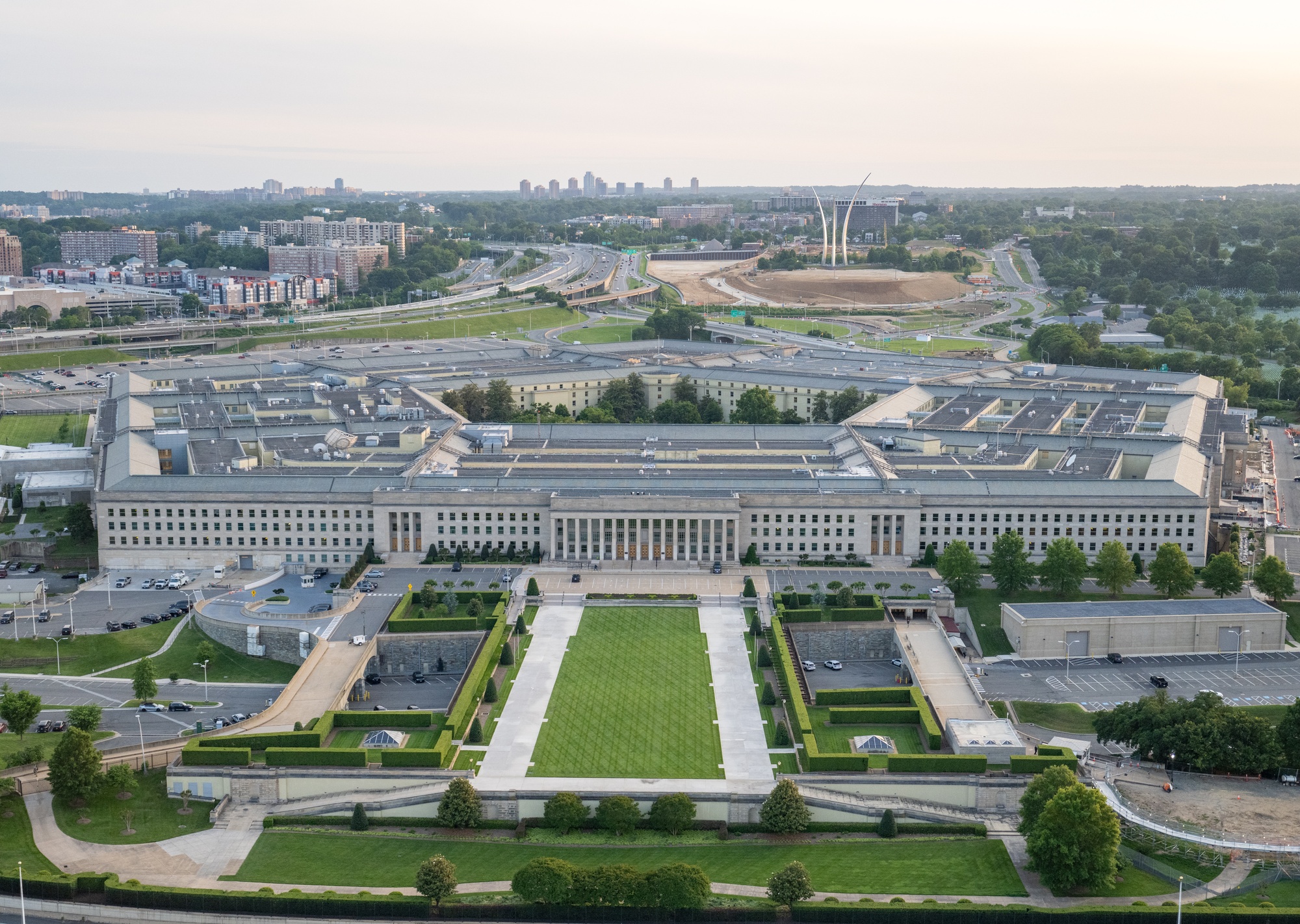
The Department of War's answer, announced on 14 September, is a legal waiver designed to open a protected route for people carrying UAP-related information.
It is a genuine change. It is also narrower than the headline version suggests, and it carries a structural catch that sits at the centre of everything that follows.
Is the Pentagon protecting whistleblowers—or controlling disclosure?
What the waiver actually does
On 14 September 2026, the U.S. Department of War—the Pentagon, as it is still more commonly known—announced what it described as targeted legal relief for people who want to disclose UAP-related National Defense Information. The official release frames it as a legally protected disclosure mechanism for information passed to designated representatives of the Presidential Unsealing and Reporting System for UAP Encounters, or PURSUE.
The arrangement covers current and former service members, civilian personnel and contractors who have, or previously had, access to relevant material. It authorises them to take that material directly to PURSUE's designated representatives.
The relief is aimed at certain civil and administrative consequences attached to non-disclosure agreements and Special Access Program Indoctrination Agreements. In plain terms: a covered disclosure made through the authorised channel should not automatically trigger the usual breach-of-agreement penalties.
That is an official acknowledgement worth pausing on. The secrecy paperwork itself, the department is conceding, may have been part of why people stayed quiet.
Now the limits, which deserve equal weight.
The waiver is not blanket permission to publish classified information. Its published text is narrowly directed to communications with designated PURSUE representatives and to specified civil and administrative enforcement provisions. The short announcement does not itself resolve how criminal exposure, anonymity, clearance restoration, employment consequences, retaliation or remedies would be handled in an individual case.
And the first audience is not the public. It is PURSUE.
Why a new route was needed
The official rationale is practical. A great deal of potentially relevant material is scattered across legacy programmes, restricted files and systems that were never designed to talk to each other. The department describes the waiver as an authorised route for systematic review, security evaluation and potential declassification of historical and ongoing UAP data. Records are far easier to find when someone tells you where they are.
The unofficial rationale is about trust, and it has a documented history.
At a 2023 congressional hearing, former Navy pilot Ryan Graves told lawmakers that existing reporting systems were inadequate. He described an encounter that, in his account, drew no acknowledgement and had no clear reporting route available at the time. What he was describing was not secrecy so much as indifference — a system that did not appear built to receive the information at all.
David Grusch, the former intelligence official whose allegations pulled the subject back into congressional focus, described something different. He told Congress he had provided sensitive information to the Intelligence Community Inspector General and to the congressional intelligence committees, while holding back details that could not be discussed in an open setting. He also described protected disclosures and professional retaliation.
That distinction is frequently mangled, so it is worth stating clearly: Grusch used the protected channels available to him. His argument was not that he had been forced outside the system. It was that the system classified too much and released too little, and that some material could have reached the public without exposing sensitive capabilities.
Across both accounts, the problem is not an absence of routes. It is an absence of confidence that the routes would protect the witness, examine the claim, or produce anything visible at the end of it.
The Borland case
That concern surfaced again in the testimony of Air Force veteran Dylan Borland.
In written evidence submitted to a House task force, Borland said he had met with AARO in 2023 but had reservations about sharing sources and methods. He said he feared further retaliation against people with firsthand exposure to what he described as technologies of unknown origin. He later described what he saw as an intake focused on assessing what he knew rather than opening an investigation, and he alleged professional reprisals, including manipulation of his security-clearance records.
These are Borland's allegations. They have not been independently established by the Pentagon, and readers should treat them as claims under examination rather than settled findings.
Even so, they describe precisely the failure the new waiver is built to address. A witness who believes that cooperating with the official process cost him his standing is a witness whose account will travel among colleagues — and that does more to suppress reporting than any signed agreement.
PURSUE is not AARO, and the difference is the point
Anyone weighing the new channel needs to know what they are walking into, because the two bodies are not interchangeable.
AARO was established to investigate UAP reports and apply a data-driven approach to them. Its orientation is analytical: assess the phenomenon, resolve the case.
PURSUE is built for something else. Its public portal describes a government-wide effort to locate, review, declassify and release records connected with UAP encounters. In practice, that makes it a records-and-release process rather than AARO’s analytic reporting office.
For an insider, that has real advantages. Material that could never safely be handed to a journalist can instead be submitted, assessed for classification, checked against existing holdings and considered for release. The legal exposure is lower and the handling is lawful.
But the same design produces the tension in this story. The government receives the information first. The government decides how it is handled. The government sets the terms of security review and determines what, if anything, eventually reaches the public.
Safer than an unauthorised leak, then — and less transparent than an independent process. Both are true, and neither cancels the other.
The announcement does not say whether or how Congress will receive material submitted through PURSUE, leaving the oversight route unresolved.
What a whistleblower can realistically say
Not "anything." The relief attaches to authorised communications with designated PURSUE representatives, and appears designed to let people discuss material covered by certain agreements without being treated as having breached them.
Within that frame, the plausible content includes:
- Historical UAP programmes
- The location of records or data sets
- Sensor, radar or imagery archives
- How previous reports were handled
- The existence of restricted projects or offices
- The names of officials or contractors who may hold relevant records
- The reasons particular material remained classified
Look at what that list is. It is a map: pointers to where evidence lives and how it was managed. That has genuine value, and it is exactly what a records operation would want from a source. It is not the same as evidence in public hands.
Whether any of it surfaces is a separate question entirely. Submitted material still goes through security review. It can be redacted, delayed or withheld. The waiver builds a bridge between secrecy and possible disclosure; it does not remove the distance between them.
One further caution, given the subject matter. Nothing in this announcement is evidence of extraterrestrial technology or alien visitation. It is a legal mechanism for handling sensitive disclosures. Only what it eventually produces — if it produces anything — can speak to the underlying question.
Who gains
Whistleblowers gain if the protection proves real, legible and trusted. Being able to report without immediately triggering an NDA-related administrative penalty is a meaningful improvement on the status quo.
PURSUE gains access to people and records that might otherwise have stayed beyond its reach. The administration gains a demonstration that its transparency programme has produced working machinery rather than an announcement.
Congress and the public gain only conditionally — if the process yields verifiable documents, sensor data or other material that survives review and is released.
That condition carries the weight of the whole thing. No public benefit is built into this design automatically. A person now has a safer way to speak to the government, which is not the same as a way to speak to the world.
What would prove the route is different
The waiver will be judged by what follows it, and the tests are concrete enough to check against.
Whether the government publishes a plain-language explanation of how the route works. Whether it identifies the authorised representatives, so a prospective witness knows who they are permitted to talk to. Whether it sets out which protections apply and, just as importantly, which do not. Whether Congress can review what is submitted to PURSUE, or whether oversight depends on being told what was found. Whether the public sees original records, or only summaries of conclusions drawn from records it never sees.
Meet those and this is a structural change. Leave them unanswered and it is a well-drafted invitation into a closed room.
The Pentagon says UAP whistleblowers can finally speak. The first test is whether the people it is addressing believe it.
The second is harder:
Will the public hear them—or only hear what the government decides can be released?
Sources and records
- Department of War, “Department of War Issues Legal Waiver to Authorize UAP Disclosures to PURSUE” (14 September 2026)
- Official PURSUE records portal
- DefenseScoop, targeted legal relief for UAP whistleblowers (14 September 2026)
- The Debrief, new pathway for government insiders (16 September 2026)
- Dylan Borland, written testimony to the House Task Force on the Declassification of Federal Secrets
- Stars and Stripes, lawmakers and UAP transparency (10 September 2025)
- CBS News, 2023 UAP hearing key takeaways