November 14, 2004 · Pacific Ocean, ~100 miles SW of San Diego, California
On November 14, 2004, Navy Commander David Fravor and Lieutenant Commander Alex Dietrich, flying F/A-18F Super Hornets from the USS Nimitz Carrier Strike Group, visually engaged a white, wingless, Tic Tac-shaped object approximately 40 feet long hovering above an ocean disturbance. For six days before the intercept, the USS Princeton's advanced SPY-1B radar had been tracking anomalous objects appearing at 80,000 feet, dropping to sea level, and hovering. The Pentagon officially declassified the video in April 2020 — the first time the U.S. government acknowledged and released UAP footage. This is the encounter that fundamentally changed U.S. military UAP reporting policy and triggered Congressional oversight.
Thirteen key images — the USS Nimitz and USS Princeton at the center of the encounter, F/A-18F Super Hornets like those Fravor and Dietrich flew, the iconic Tic Tac illustration, the 2023 Congressional hearing, and AARO's official UAP data presentations. Click any photo to view full size.
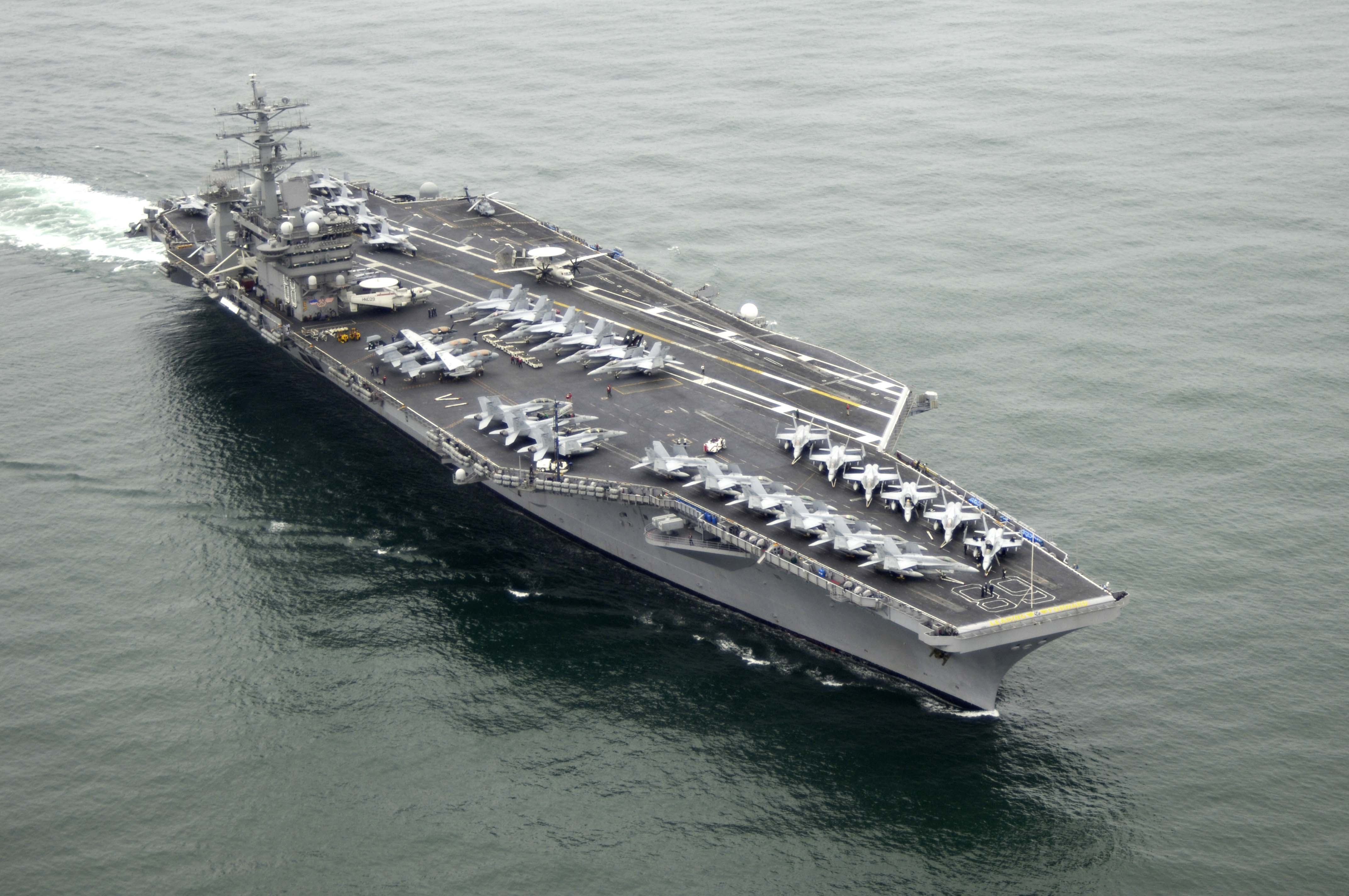
The nuclear-powered supercarrier at the center of the 2004 Tic Tac incident. Its Carrier Strike Group 11 was conducting training exercises off the Southern California coast when the encounters occurred. The Nimitz launched the F/A-18 Super Hornets that intercepted the anomalous object.
📷 United States Navy · circa 2000s · Public domain
A more recent photograph of the USS Nimitz, the carrier from which the Tic Tac encounter jets were launched in 2004. The Nimitz remains one of the most recognizable vessels in the U.S. Navy.
📷 U.S. Navy · December 3, 2022 · Public domain
The Ticonderoga-class guided missile cruiser whose AN/SPY-1B radar first detected and tracked the anomalous aerial vehicles for approximately 6 days before Fravor's intercept. Senior Chief Petty Officer Kevin Day was the Princeton's senior radar operator.
📷 Airman Angel G. Hilbrands, U.S. Navy · 2003 · Public domain
An earlier photograph of the guided missile cruiser that tracked the Tic Tac objects on its advanced AN/SPY-1B radar system. The Princeton was part of Carrier Strike Group 11 alongside the USS Nimitz during the November 2004 encounter.
📷 PH2 Dale W. Novotasky, U.S. Navy · June 1, 1993 · Public domain
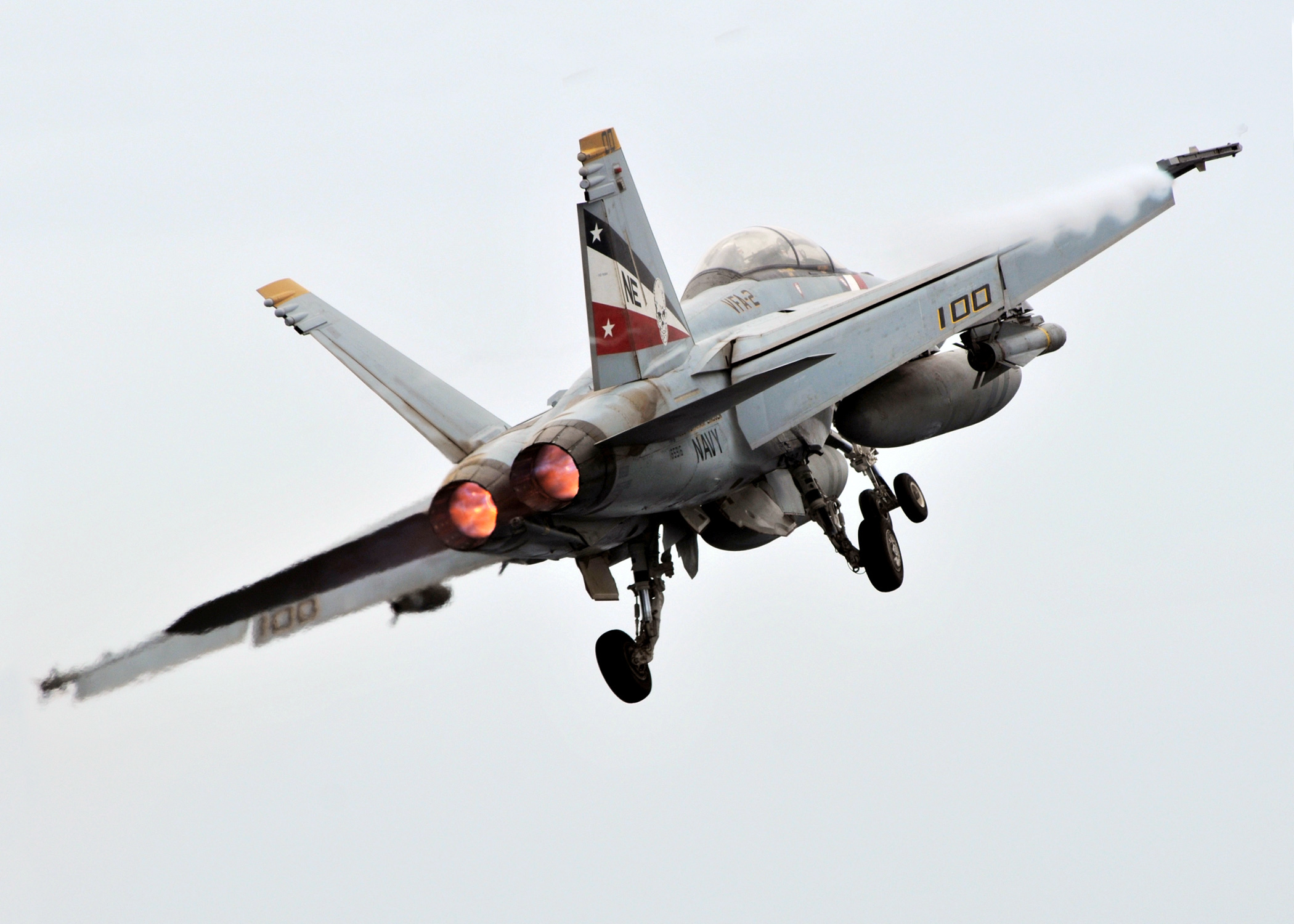
The same type of aircraft flown by Commander David Fravor and Lieutenant Commander Alex Dietrich during the November 14, 2004 Tic Tac encounter. The Super Hornet's AN/ASQ-228 ATFLIR targeting pod captured the famous FLIR1 infrared video.
📷 MC2 James R. Evans, U.S. Navy · circa 2010s · Public domain
A clear view of an F/A-18F Super Hornet in flight, showing the aircraft type used by Navy pilots during the Tic Tac encounter. The Super Hornet's advanced sensors, including the ATFLIR pod, captured the declassified infrared footage.
📷 Andrew Mercer · 2019 · CC BY-SA 4.0
An illustration depicting the Tic Tac-shaped object encountered by Commander Fravor above an area of churning ocean water. The object was described as white, smooth, approximately 40 feet long, with no visible wings, control surfaces, or exhaust. This image has become one of the most widely shared visual representations of the encounter.
📷 JMK (Wikimedia) · circa 2017 · CC BY-SA 4.0
A map/diagram showing the initial location of the F/A-18 jets when they were directed to intercept the anomalous object tracked by the USS Princeton's radar. The encounter occurred approximately 100 miles southwest of San Diego, California.
📷 Anne drew Andrew and Drew (Wikimedia) · circa 2020 · CC BY-SA 3.0
The historic July 26, 2023 Congressional hearing on UAPs before the House Oversight Committee. From left: David Grusch (whistleblower/former NGA intelligence officer), Ryan Graves (former Navy F/A-18F pilot), and Commander David Fravor (Ret., the pilot who engaged the Tic Tac). The first open Congressional hearing on UAPs in over 50 years.
📷 U.S. House Committee on Oversight · July 26, 2023 · Public domain
Ryan Graves, former Navy F/A-18F pilot, testifying at the July 26, 2023 Congressional hearing. Graves was the first active-duty military pilot to publicly disclose regular UAP sightings. He later founded Americans for Safe Aerospace, the first military pilot-led nonprofit dedicated to UAP transparency.
📷 U.S. House Committee · July 26, 2023 · Public domain
The official logo of AARO, established in July 2022 within the Office of the Secretary of Defense. AARO succeeded the UAP Task Force and is responsible for detecting, identifying, and resolving UAP reports across the Department of Defense.
📷 U.S. Department of Defense · 2022 · Public domain
A slide from AARO Director Sean Kirkpatrick's May 31, 2023 presentation to the NASA Independent Study Team on UAPs, showing reported UAP hotspot locations. This demonstrates the government's increased transparency about UAP reporting data following the Nimitz case.
📷 U.S. Air Force / AARO · May 31, 2023 · Public domain
A slide from AARO Director Dr. Sean Kirkpatrick's presentation to the NASA Independent Study Team on UAPs on May 31, 2023. One of the first times a sitting AARO director publicly presented UAP data to a scientific body — a direct consequence of the attention generated by the Nimitz case.
📷 AARO / NASA · May 31, 2023 · Public domain
The actual declassified Pentagon UAP videos — the primary visual evidence from the Nimitz encounter and related Navy cases. These are not YouTube commentary. They are official U.S. government recordings released by the Department of Defense on April 27, 2020, after a thorough review determined they "do not reveal any sensitive capabilities or systems."
The actual declassified FLIR1 video of the Tic Tac object, recorded by LT Chad Underwood on November 14, 2004, from an F/A-18F Super Hornet equipped with an ATFLIR pod. The video shows an oval/oblong object that appears to accelerate beyond the camera's tracking ability. The Pentagon officially declassified and released this video on April 27, 2020. This is the most famous UAP video in history and the primary visual evidence from the Nimitz encounter.
The GIMBAL video, recorded in January 2015 by crew from the USS Theodore Roosevelt Carrier Strike Group off the East Coast of the United States. While not from the Nimitz encounter itself, it was released alongside the Tic Tac video and is part of the same broader UAP phenomenon documented by Navy pilots. Ryan Graves was among the pilots who reported these encounters. Skeptics argue the apparent rotation is a camera glare artifact from the ATFLIR gimbal.
The GO FAST video, recorded in February or March 2015 by crew from the USS Theodore Roosevelt. Released alongside the Tic Tac and Gimbal videos by the Pentagon in April 2020. Skeptics, including Mick West, have argued this video shows parallax effects making a distant object appear to move faster than it actually is.
The encounter that changed UAP history — from six days of radar tracking to the visual intercept, the declassified video, and the political firestorm that followed.
The 2004 USS Nimitz Tic Tac UFO encounter is one of the most well-documented and credible UAP incidents in history. Navy Commander David Fravor and Lieutenant Commander Alex Dietrich, flying F/A-18F Super Hornets from the USS Nimitz Carrier Strike Group, visually engaged a white, wingless, Tic Tac-shaped object approximately 40 feet long hovering above an ocean disturbance.
The USS Princeton's SPY-1B radar had been tracking anomalous aerial vehicles (AAVs) for approximately 6 days prior — objects that appeared at 80,000 feet, dropped to sea level, hovered, then shot back up. Senior Chief Petty Officer Kevin Day, the Princeton's senior radar operator, reported well over 100 anomalous contacts over the course of the week. The objects appeared to be monitoring the exercise area.
On November 14, 2004, Day directed Fravor and Dietrich to intercept. Four personnel total — two pilots and two Weapons Systems Officers in two aircraft — participated. Arriving at the intercept coordinates, they observed churning, discolored ocean water approximately the size of a Boeing 737, with a white, wingless, oblong object hovering above it. Fravor descended to investigate; the object ascended, mirroring his flight path. After approximately 5 minutes, the Tic Tac accelerated away at extreme speed — Fravor estimated it traveled 60 miles in less than a minute.
Shortly after Fravor's visual encounter, a second wave of fighters launched from the USS Nimitz, including LT Chad Underwood, whose F/A-18F was equipped with an ATFLIR (Advanced Targeting Forward Looking Infrared) pod. Underwood recorded the now-famous FLIR1 video of the Tic Tac object. Unlike Fravor, Underwood did not visually observe the object with his own eyes — he focused on capturing the video. It was Underwood who coined the term "Tic Tac" to describe the object's shape.
In the aftermath, enlisted witnesses Gary Voorhis and PJ Hughes reported that "unknown individuals" arrived aboard the USS Princeton and USS Nimitz and allegedly instructed personnel to delete data related to the encounter. Some witnesses reported being required to sign NDAs. The original data tapes from the encounter reportedly went missing.
The Pentagon's secret AATIP (Advanced Aerospace Threat Identification Program), funded with $22 million by Senator Harry Reid, investigated the encounter. When Luis Elizondo resigned from the Pentagon in October 2017 in protest, he helped facilitate the release of the Tic Tac, Gimbal, and Go Fast videos. The December 16, 2017 New York Times article by Helene Cooper, Leslie Kean, and Ralph Blumenthal brought the case to the world. The Pentagon officially declassified the videos on April 27, 2020. The case fundamentally changed U.S. military UAP reporting policy — the Navy now encourages pilots to report UAP encounters, a complete reversal from previous policy — and triggered Congressional oversight, culminating in the historic July 26, 2023 House Oversight Committee hearing.
From the first radar contacts in early November 2004 through the Pentagon declassification, Congressional hearings, and AARO reports — 20 years of the case that changed UAP history.
The USS Nimitz Carrier Strike Group 11, including the USS Nimitz (CVN-68) and USS Princeton (CG-59), conducted training exercises off the Southern California coast.
The USS Princeton's AN/SPY-1B radar, operated by Senior Chief Petty Officer Kevin Day, detected anomalous aerial vehicles (AAVs). Objects appeared at 80,000 feet, descended rapidly to sea level, hovered for hours, then shot back up. Over 100 contacts were tracked over approximately 6 days. The objects appeared to be monitoring the exercise area.
USS Princeton radar detected anomalous contacts. Senior Chief Kevin Day directed Commander David Fravor and Lieutenant Commander Alex Dietrich, flying F/A-18F Super Hornets from the USS Nimitz, to intercept. Four personnel total (two pilots, two WSOs) in two aircraft participated.
Fravor and Dietrich arrived at the intercept coordinates and observed churning/discolored ocean water (approximately the size of a 737) with a white, wingless, oblong object (~40 feet long) hovering above it. Fravor descended to investigate; the object ascended, mirroring his flight path. After approximately 5 minutes, the Tic Tac accelerated away at extreme speed — Fravor estimated 60 miles in less than a minute — and was detected by radar at the CAP point. Fravor described the object as "like a Tic Tac" — the name stuck.
The core visual encounter — one of the most well-documented UAP incidents in history.
A second wave of fighters launched from the USS Nimitz, including LT Chad Underwood, whose F/A-18F was equipped with an ATFLIR pod. Underwood recorded the now-famous FLIR1 video of the Tic Tac object. Unlike Fravor, Underwood did not visually observe the object — he focused on capturing the video. Underwood coined the "Tic Tac" description.
The FLIR1 video — the primary visual evidence of the encounter.
According to enlisted witnesses (Gary Voorhis, PJ Hughes), "unknown individuals" arrived aboard the USS Princeton and USS Nimitz and allegedly instructed personnel to delete data related to the encounter. Some witnesses reported being required to sign NDAs. Data tapes from the encounter reportedly went missing. Fravor later acknowledged the tapes disappeared, believing they were likely recorded over.
The alleged data confiscation — a persistent controversy in the case.
A copy of the FLIR1 video appeared online in a UFO forum, according to Wired magazine — the first known unauthorized leak of the Tic Tac footage.
The video circulated unnoticed for a decade before the NYT article.
The Advanced Aerospace Threat Identification Program (AATIP), also known as AAWSAP, operated under the Defense Intelligence Agency (DIA) with $22 million in funding secured by Senator Harry Reid. The program investigated UAP encounters including the Nimitz case. Most funding went to Bigelow Aerospace.
The secret government UFO program that investigated the Nimitz encounter.
Luis Elizondo resigned from the Pentagon in protest, submitting a resignation letter to Defense Secretary James Mattis citing lack of transparency and the program not being taken seriously regarding UAP issues.
The New York Times published two landmark articles by Helene Cooper, Leslie Kean, and Ralph Blumenthal: "2 Navy Airmen and an Object That Accelerated Like Nothing I've Ever Seen" and "Glowing Auras and Black Money: The Pentagon's Mysterious U.F.O. Program." The articles included the FLIR (Tic Tac) and GIMBAL videos and revealed the existence of AATIP. This is widely considered the catalyst for the modern UAP disclosure movement.
The article that changed the UAP conversation forever.
The Pentagon officially declassified and released the three UAP videos (FLIR/Tic Tac, GIMBAL, GO FAST), confirming their authenticity. The DoD stated the release "does not reveal any sensitive capabilities or systems" and "does not impinge on any subsequent investigations of military air space incursions by unidentified aerial phenomena."
Official Pentagon confirmation and release of the videos.
Pentagon spokesperson Susan Gough confirmed the released videos were made by naval aviators and were "part of a larger issue of an increased number of training range incursions by unidentified aerial phenomena in recent years."
60 Minutes aired a segment featuring Cmdr. Dave Fravor and Lt. Cmdr. Alex Dietrich publicly describing the Tic Tac encounter for the first time on national television. Ryan Graves also appeared, describing his separate encounters. The segment significantly increased public awareness.
The Office of the Director of National Intelligence released the UAP Task Force Preliminary Assessment, examining 144 UAP reports from 2004–2021. Most could not be explained. Only one was attributed to a known airborne object. The report acknowledged UAP "probably do represent physical objects" and "pose a hazard to safety of flight."
The first official U.S. government intelligence assessment of UAP.
AARO (All-domain Anomaly Resolution Office) was established within the Office of the Secretary of Defense, succeeding the UAP Task Force. AARO is responsible for synchronizing efforts across DoD and federal agencies to detect, identify, and resolve UAP reports.
AARO Director Dr. Sean Kirkpatrick presented UAP data to the NASA Independent Study Team on UAPs, one of the first times a sitting AARO director publicly presented UAP data to a scientific body.
The U.S. House Committee on Oversight and Accountability held the first open Congressional hearing on UAPs in over 50 years. Witnesses included David Grusch (whistleblower), Commander David Fravor (Ret.), and Ryan Graves. The hearing brought the Nimitz case to the forefront of national attention and prompted bipartisan calls for a select Congressional committee on UAPs.
The first open Congressional hearing on UAPs in over 50 years.
AARO published its Historical Record Report Volume 1, a comprehensive review of U.S. government involvement with UAP. AARO concluded it found no verifiable evidence of UAP crash retrieval programs — a conclusion disputed by Grusch and disclosure advocates.
AARO released its FY24 Consolidated Annual Report on UAP, covering reports from May 1, 2023 to June 1, 2024. The 20th anniversary of the Nimitz encounter.
Twenty years after the encounter, the government's UAP investigation continues.
Nine key figures in the case — from the pilots who visually engaged the Tic Tac to the radar operator who tracked it for days, the enlisted personnel who witnessed the aftermath, and the government officials who investigated and disclosed it. Credibility is assessed honestly for each.
Commanding Officer, VFA-41 (Black Aces) · F/A-18F Super Hornet pilot · Top Gun graduate
Lead pilot · USS Nimitz · November 14, 2004
Credibility: 🟢 Reliable (decades of Navy flight experience, consistent testimony, testified under oath)
Fravor was the lead pilot who visually engaged the Tic Tac-shaped object on November 14, 2004. He descended to investigate an area of churning water where the USS Princeton's radar indicated a contact. He observed a white, wingless, oblong object approximately 40 feet long hovering above the disturbance. As he spiraled down, the object ascended, mirroring his flight path. The object then accelerated away at extreme speed — Fravor estimated it traveled 60 miles in less than a minute. Four people (two pilots and two WSOs in two aircraft) witnessed the object for approximately 5 minutes. His account has been consistent across multiple interviews and Congressional testimony.
F/A-18F pilot · Fravor's wingman during the Tic Tac intercept
Wing pilot · USS Nimitz · November 14, 2004
Credibility: 🟢 Reliable (experienced Navy pilot, second independent eyewitness, reluctance enhances credibility)
Dietrich was Fravor's wing pilot during the November 14, 2004 intercept. She observed the same white, Tic Tac-shaped object hovering above the ocean disturbance. She described the experience as "practically beat up" and said it was "unsettling." She witnessed the object's behavior alongside Fravor for approximately 5 minutes. Dietrich was initially reluctant to speak publicly but did so after encouragement, first appearing on 60 Minutes in May 2021. Testified to Congress in 2023.
Senior radar operator · USS Princeton (CG-59) · AEGIS Combat System
Radar operator · USS Princeton · November 10–14, 2004
Credibility: 🟢 Reliable (highly trained radar operator, corroborated by multiple systems, career affected by reporting)
Day was the USS Princeton's senior radar operator who first detected anomalous aerial vehicles (AAVs) on the ship's AN/SPY-1B radar system. He tracked objects for approximately 6 days before the November 14 intercept. The objects appeared at 80,000 feet, dropped to sea level (28,000 feet), hovered for hours, then shot back up. Day reported well over 100 AAV contacts over the course of the week. He was the one who directed Fravor's flight to intercept. Day says his career was negatively affected after he reported the anomalies. Founded UAP eXpeditions.
Former Navy F/A-18F pilot · USS Theodore Roosevelt Carrier Strike Group · Founder, Americans for Safe Aerospace
Related witness (2014–2015 encounters) · Congressional witness
Credibility: 🟢 Reliable (over a decade of Navy service, two combat deployments, risked career to come forward)
Graves was not a direct witness to the 2004 Nimitz Tic Tac encounter but is closely related — he was part of the 2014–2015 USS Theodore Roosevelt Carrier Strike Group encounters that produced the GIMBAL and GO FAST videos. Graves and his squadron observed UAPs nearly daily over the Atlantic, including objects forming a formation, with one "cube inside a sphere." He was the first active-duty military pilot to publicly disclose regular UAP sightings. He later founded Americans for Safe Aerospace, a nonprofit advocating for UAP transparency. Testified before Congress on July 26, 2023.
Petty Officer 3rd Class · Systems technician · USS Princeton (CG-59)
Enlisted witness · USS Princeton · November 2004
Credibility: 🟡 Moderate (direct access to classified networks, corroborated by others, data deletion unverified)
Voorhis was a systems technician aboard the USS Princeton who witnessed a much longer and clearer version of the ATFLIR video (approximately 8–10 minutes long, much clearer than the released clip) through the ship's Top Secret LAN network. He also reported seeing indistinct objects in the distance in the days before the intercept. Voorhis claims that "unknown individuals" arrived on the ship after the incident and instructed personnel to delete data.
Petty Officer · Systems technician · USS Nimitz (CVN-68)
Enlisted witness · USS Nimitz · November 2004
Credibility: 🟡 Moderate (direct experience with ship's data systems, corroborated by Voorhis, data confiscation unverified)
Hughes was a systems technician aboard the USS Nimitz who was unaware of the UFO events until after the fact. He reported that "unknown individuals" arrived on the ship and instructed personnel to delete electronic data related to the encounter. Hughes said a friend and aircrew member on one of the E-2 Hawkeye aircraft told him he had to sign an NDA about the incident. Hughes claims data was taken from the ship's systems.
Former director, Advanced Aerospace Threat Identification Program (AATIP)
Pentagon official · AATIP director · Resigned October 2017
Credibility: 🟠 Controversial (role disputed by Pentagon, but well-established in disclosure movement)
Elizondo did not witness the Nimitz encounter directly but was the Pentagon official who led AATIP, the program that investigated the Tic Tac incident and other military UAP encounters. He resigned from the Pentagon in October 2017 in protest, writing a resignation letter to Defense Secretary James Mattis citing lack of transparency and the program not being taken seriously. Elizondo helped facilitate the release of the Tic Tac, Gimbal, and Go Fast videos. He published his memoir "Imminent" in 2024, which became a New York Times bestseller. The Pentagon has stated Elizondo "had no responsibilities with regard to the AATIP program," a claim Elizondo disputes.
Former UAP Task Force member · National Geospatial-Intelligence Agency (NGA) intelligence officer · Whistleblower
Whistleblower · Congressional witness · July 26, 2023
Credibility: 🟠 Controversial (legitimate background, but claims based on second-hand accounts, not independently verified)
Grusch did not witness the Nimitz encounter. He is a whistleblower who claimed, under oath before Congress, that the U.S. government has been operating a multi-decade UAP crash retrieval and reverse-engineering program. He claimed to have interviewed 40 witnesses over four years who described recovered "non-human" craft and biological remains. Grusch filed a formal whistleblower complaint with the Intelligence Community Inspector General after being denied access to these alleged programs. AARO's 2024 report stated it found no verifiable evidence of such programs.
Former U.S. Senate Majority Leader · Initiated AATIP funding
Political catalyst · Secured $22M for AATIP · 2007
Credibility: 🟢 Reliable (former Senate Majority Leader, one of the highest-ranking officials to support UAP research)
Reid did not witness the Nimitz encounter. He was the Senator who, at the urging of his friend Robert Bigelow, secured $22 million in black budget funding for the AATIP/AAWSAP program in 2007. The program, run through the Defense Intelligence Agency, investigated UAP encounters including the Nimitz case. Most of the $22 million went to Bigelow Aerospace. Reid defended the program's legacy, saying the funding was justified by the quality of the encounters reported. Passed away in 2021.
Thirteen key government and journalistic documents — the official Pentagon declassification statement, the redacted Executive Report, AARO's historical and annual reports, the UAP Task Force assessment, Congressional hearing transcripts and witness statements, the landmark New York Times articles, and The Black Vault's comprehensive FOIA archive. Click any card to view the source document.
Official DoD statement authorizing the release of three unclassified Navy videos (FLIR/Tic Tac, GIMBAL, and GO FAST). States: "After a thorough review, the department has determined that the authorized release of these unclassified videos does not reveal any sensitive capabilities or systems, and does not impinge on any subsequent investigations of military air space incursions by unidentified aerial phenomena."
The official Pentagon confirmation of the videos' authenticity — the first time the U.S. government officially acknowledged and released UAP footage.
View document →A 13-page redacted executive report analyzing the Tic Tac UFO incidents. The report confirms the Nimitz Carrier Strike Group had several interactions with Anomalous Aerial Vehicles (AAVs). It documents radar data, visual observations, and the objects' behavior. Originally obtained and published by The Black Vault and 8 News Now (Las Vegas).
One of the few official government documents specifically analyzing the Nimitz Tic Tac encounter.
View document →AARO's comprehensive historical report on U.S. government involvement with UAP. Volume 1 covers the historical record of U.S. government involvement with unidentified anomalous phenomena. The report examines claims of UAP crash retrieval programs and reverse engineering efforts. AARO concluded it found no verifiable evidence of such programs, a conclusion disputed by whistleblowers and advocates.
The most comprehensive official U.S. government historical review of UAP programs. Controversial — its conclusions were disputed by David Grusch and others.
View document →AARO's annual report covering UAP reports from May 1, 2023 to June 1, 2024, as well as any UAP reports from previous time periods not included in earlier reports. This is the most recent comprehensive official UAP report from the Pentagon — released on the 20th anniversary of the Nimitz encounter.
The latest official UAP report, continuing the government's ongoing investigation triggered by the Nimitz encounter.
View document →AARO's official portal for UAP records and information papers, maintained in coordination with the National Archives and Records Administration (NARA). Contains declassified UAP documents and reports.
The official government repository for UAP records — a direct institutional consequence of the Nimitz case.
View document →The preliminary assessment by the UAP Task Force, mandated by the Senate Intelligence Committee. The report examined 144 UAP reports from U.S. government sources spanning 2004–2021, most of which the government could not explain. Only one was attributed to a known airborne object. The report categorized UAPs into five categories: airborne clutter, natural atmospheric phenomena, USG/industry developmental programs, foreign adversary systems, and a catch-all "other" category.
The first official U.S. government intelligence assessment of UAP — directly triggered by the Nimitz case.
View document →Commander David Fravor's (Ret.) written testimony to Congress, describing the Tic Tac encounter in detail. States: "This Tic Tac Object had just traveled 60 miles in a very short period of time (less than a minute), was far superior in performance to my brand new F/A-18F."
Fravor's first-person sworn testimony to Congress about the Nimitz encounter — a historic document in the UAP disclosure movement.
View document →Ryan Graves' written testimony to Congress describing his UAP encounters as a Navy F/A-18F pilot. Graves states: "My name is Ryan 'FOBS' Graves and I am a former F-18 pilot with over a decade of service in the U.S. Navy, including two deployments."
Sworn Congressional testimony from the first active-duty military pilot to publicly disclose UAP sightings.
View document →David Grusch's opening statement to the House Oversight Committee, claiming a multi-decade UAP crash retrieval and reverse-engineering program that he was denied access to. Grusch testified under oath about non-human intelligence and recovered craft.
Whistleblower testimony that escalated the UAP issue to national security concern and prompted bipartisan calls for a select Congressional committee.
View document →Full transcript of the House Oversight Committee hearing on UAPs, featuring testimony from David Grusch, Commander David Fravor (Ret.), and Ryan Graves. The hearing covered the Nimitz encounter, Grusch's whistleblower claims, and government transparency issues.
The first open Congressional hearing on UAPs in over 50 years — directly resulting from the Nimitz case and subsequent disclosures.
View document →The landmark New York Times article that first brought the Nimitz Tic Tac encounter to public attention. Co-authored by Helene Cooper, Leslie Kean, and Ralph Blumenthal, the article included the declassified FLIR and GIMBAL videos and revealed the existence of the Pentagon's AATIP program. This article is widely considered the catalyst for the modern UAP disclosure movement.
The article that changed the UAP conversation forever — the first time a major U.S. newspaper published declassified military UAP footage.
View document →The companion article revealing the existence of AATIP (Advanced Aerospace Threat Identification Program), a secret $22 million Pentagon program funded by Senator Harry Reid. The article detailed how the program investigated UAP encounters, including the Nimitz incident, and how most of the funding went to Bigelow Aerospace.
Revealed the secret government UFO investigation program created partly in response to the Nimitz encounter.
View document →A comprehensive collection of declassified and FOIA-obtained documents related to the Nimitz Tic Tac incident, including the redacted Executive Report, radar data, and related government correspondence. Maintained by researcher John Greenewald Jr.
The most comprehensive publicly available archive of government documents on the Nimitz Tic Tac incident, obtained through decades of FOIA requests.
View document →Eight skeptical arguments against the extraordinary interpretation of the Nimitz encounter and related videos — presented fairly, each with the evidence cited and the proponents named. Mick West's Metabunk analyses feature prominently, as do alternative explanations from radar anomalies to classified technology.
Proposed by: Mick West (Metabunk, former video game programmer and skeptical investigator)
West argues that the FLIR1 video shows an object that could be a distant aircraft, with the apparent sudden acceleration being an artifact of the camera's tracking system and zoom changes. The ATFLIR pod's tracking behavior can make distant objects appear to move erratically when the camera locks on and adjusts. West notes the video was taken "well after the famous encounter" and may not show the same object Fravor saw visually.
Proposed by: Mick West (Metabunk)
West argues that apparent high-speed movement in the GO FAST video is actually a parallax effect — the object is relatively stationary or slow-moving but appears to move fast due to the perspective of the fast-moving jet. Similarly, the Tic Tac's apparent maneuvers during Fravor's visual encounter could be explained by parallax from a distant object, though Fravor was much closer. The Metabunk analysis thread "Fravor's Hypersonic UFO observation. Parallax Illusion?" explores this extensively.
Proposed by: Mick West (Metabunk)
West has suggested the Tic Tac object could have been a large weather balloon or research balloon at distance. The lack of visible wings or propulsion, the white color, and the oblong shape are all consistent with a balloon. The apparent hovering could be a balloon maintaining position, and the apparent acceleration could be parallax as the jet passed the object. However, this theory does not account for the radar data showing the objects descending from 80,000 feet.
Proposed by: Various skeptics
Some have suggested the USS Princeton's radar contacts could be explained by atmospheric ducting, radar clutter, or software anomalies. However, this theory is weakened by the fact that multiple independent radar systems (ship-based SPY-1B and airborne radar) tracked the same objects simultaneously, which would not be explained by a single-system error. Kevin Day, the radar operator, was highly experienced with the AEGIS system and ruled out common anomalies.
Proposed by: Mick West (Metabunk)
For the later 2019 USS Russell triangular UFO video (not the Tic Tac), West demonstrated the bokeh effect — where out-of-focus light sources appear triangular or pyramidal due to the camera aperture shape. While not directly applied to the Tic Tac, this principle of optical artifacts is relevant to the broader question of whether FLIR imagery accurately represents physical objects. The Gimbal video's apparent rotation has also been explained as a glare artifact.
Proposed by: Various analysts
Some suggest the object could have been an advanced drone or classified U.S. military technology being tested near the Navy exercise. The Pentagon's official statement that the videos do not "reveal any sensitive capabilities or systems" is ambiguous and could be read as consistent with this theory. However, the objects' performance characteristics (80,000 feet to sea level in seconds, hovering, extreme acceleration) exceed any known drone technology.
Proposed by: Various skeptics, Keith Kloor (journalism professor)
Skeptics have suggested that the stress of high-speed flight, the limitations of human perception under extreme conditions, and the expectation of seeing something unusual could contribute to misidentification. Kloor criticized the New York Times coverage as "a curious narrative that appears to be driven by thinly-sourced and slanted reporting" and argued that "cursory attention has been given to the most likely, prosaic explanations." However, the combination of radar data from multiple systems and four trained eyewitnesses makes pure cognitive error unlikely.
Proposed by: Mick West (Metabunk)
For the GIMBAL video (not the Tic Tac, but related), West demonstrated that the apparent rotation of the object is likely the rotation of a camera glare pattern as the ATFLIR pod's gimbal rotates, not the actual object rotating. The glare hides the real object underneath. This analysis shows how FLIR footage can be misleading and how apparent extraordinary movement can have prosaic optical explanations.
The Nimitz case didn't just change policy — it changed lives. Pilots who risked their careers, a radar operator who was sidelined, enlisted personnel told to delete data, and a government official who resigned in protest. And it reversed decades of military stigma around reporting UFOs.
Retired as Commander. Has spoken publicly and extensively about the encounter since the 2017 NYT article, including on 60 Minutes (2021), PBS, and before Congress (July 2023). Says the encounter changed his perspective on what is possible. Has been attacked online by skeptics, particularly Mick West's supporters. His consistent testimony across years and his willingness to testify under oath before Congress have made him the public face of credible military UAP witnesses. Despite criticism, he has maintained his composure and never retracted or modified his account.
"This Tic Tac Object had just traveled 60 miles in a very short period of time (less than a minute), was far superior in performance to my brand new F/A-18F."
Retired from the Navy. Spoke publicly only after encouragement, first appearing on 60 Minutes in May 2021. Described feeling "practically beat up" by the experience. Struggled with the decision to go public — she initially declined interviews but eventually agreed. Her reluctance and the emotional weight she carried made her testimony particularly powerful. Testified before Congress in July 2023. She has described the stigma of speaking about UFOs in the military culture.
"It was practically beat up... it was unsettling."
The radar operator who first detected the anomalous objects on the USS Princeton. His career was affected — he says he was sidelined after reporting the anomalies. Day has spoken publicly in documentaries and podcasts, including The Nimitz Encounters documentary and the UAP Files Podcast. He has named individuals involved in the aftermath of the incident and has been an active advocate for disclosure. Founded UAP eXpeditions.
"My job was to man the radars and ID everything that flew in the skies."
Left the Navy after his encounters and his decision to come forward. Founded Americans for Safe Aerospace (ASA), the first military pilot-led nonprofit dedicated to UAP as a matter of national security. Became a public advocate for UAP transparency. His career as a Navy pilot was effectively ended by speaking out, but he has channeled his experience into advocacy. Testified before Congress on July 26, 2023. ASA has become a significant organization in the UAP disclosure movement, collecting reports from military personnel.
"I am a former F-18 pilot with over a decade of service in the U.S. Navy, including two deployments."
Resigned from the Pentagon in October 2017 in protest, writing a resignation letter to Defense Secretary James Mattis. His letter cited lack of transparency and the program's inability to make progress on UAP issues. Elizondo became a public figure in the UAP movement, appearing on 60 Minutes and numerous media outlets. Published his memoir "Imminent" in 2024, which became a New York Times bestseller. His credibility has been debated — the Pentagon stated he "had no responsibilities with regard to the AATIP program," which Elizondo disputes.
"The mission of AATIP was quite simple. It was to collect and analyze information involving anomalous aerial vehicles."
Both enlisted witnesses who came forward years after the incident. Voorhis (USS Princeton) and Hughes (USS Nimitz) describe being instructed to delete data by "unknown individuals" who arrived after the encounter. Their accounts, while controversial, add a layer of testimony from enlisted personnel who had different perspectives than the pilots. They have appeared in The Nimitz Encounters documentary and various podcasts. Their willingness to speak despite the stigma has been noted by researchers.
"I definitely saw video that was roughly eight to 10 minutes long and a lot more clear." — Gary Voorhis
Speaking about UFOs historically carried a severe professional stigma in the military. Many pilots reported being mocked, sidelined, or having their careers affected for reporting UAP encounters. The Nimitz case — with its credible witnesses, radar data, and declassified video — fundamentally changed this culture. The Navy officially changed its reporting policy after Nimitz: pilots are now ENCOURAGED to report UAP encounters, a complete reversal from previous policy. The establishment of AARO and the UAP Task Force institutionalized this shift. The stigma has not disappeared, but it has significantly diminished.
Sources: 60 Minutes (May 16, 2021); Congressional hearing testimony (July 26, 2023); AARO records
Eighteen surprising facts about the Nimitz Tic Tac encounter that go beyond the standard narrative — from six days of radar tracking to the longer video witnesses saw, the $22 million that went to Bigelow Aerospace, the 2007 forum leak, and the complete reversal of Navy UAP reporting policy.
Five books covering the Nimitz encounter and the broader UAP disclosure movement it launched — from the insider account of the man who ran AATIP to the program director's reveal of AAWSAP, and the journalist who broke the story. Links support The UAP Map via Amazon Associates.
Luis Elizondo, former director of AATIP, provides a first-hand account of the Pentagon's UFO investigations. The book covers the Nimitz encounter, the AATIP program, Elizondo's resignation in protest, and his claims about a secret UFO crash retrieval program. Elizondo claims technology and biological remains of extraterrestrial origin have been retrieved. The book became a New York Times bestseller.
Written by the man who ran the Pentagon program that investigated the Nimitz encounter.
View on Amazon →Unmasks the massive scope of the Pentagon's landmark UFO study (AAWSAP/AATIP) that ran from the Defense Intelligence Agency. The book details the program's investigation of UAP encounters including the Nimitz case, the Skinwalker Ranch phenomenon, and the connection between the two. Dr. James Lacatski was the AAWSAP program manager.
Provides insider details about the AATIP/AAWSAP program that investigated the Nimitz encounter, written by the program's actual director.
View on Amazon →Leslie Kean's landmark book that compiled credible UFO reports from military personnel, pilots, and government officials. Published before the Nimitz story broke but helped lay the groundwork for the 2017 New York Times article. Kean, who co-authored the NYT article that revealed the Nimitz encounter, established herself as a credible UFO journalist through this book. Includes a foreword by John Podesta.
By the journalist who broke the Nimitz story. Established the credibility framework that made the 2017 disclosure possible.
View on Amazon →The first volume of Richard Dolan's comprehensive chronological narrative of the national security dimensions of the UFO phenomenon. While it predates the Nimitz encounter, it provides essential historical context for understanding how the U.S. government has handled UFO reports throughout the Cold War era and beyond.
Provides the historical context of U.S. government UFO secrecy that the Nimitz case ultimately challenged and began to change.
View on Amazon →The second volume in Dolan's series, covering the later Cold War period and the continuing government cover-up of UFO phenomena. Together with the first volume, it provides the essential background for understanding why the Nimitz encounter was initially suppressed and why its eventual disclosure was so significant.
Completes the historical context leading up to the modern UAP era that the Nimitz case inaugurated.
View on Amazon →Fifteen YouTube videos — the official DoD release, 60 Minutes interviews with Fravor and Dietrich, The Nimitz Encounters documentary, Kevin Day and Gary Voorhis interviews, the full 2023 Congressional hearing, and Mick West's skeptical breakdown of the Pentagon videos.
Department of Defense / Official · 1:17
The official declassified FLIR1 video of the Tic Tac object, released by the Pentagon in April 2020. The actual government-released footage recorded by LT Chad Underwood on November 14, 2004.
Various / News compilations · ~5 min
Compilation of the three Pentagon-declassified UAP videos: FLIR (Tic Tac), GIMBAL, and GO FAST, with context about each encounter.
60 Minutes · ~13 min
The landmark 60 Minutes segment (May 16, 2021) where Cmdr. Dave Fravor and Lt. Cmdr. Alex Dietrich publicly described their Tic Tac encounter for the first time on national television. Also features Ryan Graves. Interviewed by Bill Whitaker.
60 Minutes / CBS News · ~5 min
Additional footage from the 60 Minutes interview where Cmdr. Dave Fravor and Lt. Cmdr. Alex Dietrich describe their unsettling encounter with the Tic Tac object during a training exercise with the USS Nimitz Carrier Strike Group.
NBC News / 60 Minutes · ~7 min
Gadi Schwartz's extended interview with retired Navy Commander David Fravor, who describes his Tic Tac sighting in detail.
Dave C. Beaty / The Nimitz Encounters · ~30 min
Dave C. Beaty's 2019 documentary that reconstructed the Nimitz Tic Tac UFO event using witness testimony from Kevin Day, Gary Voorhis, PJ Hughes, and others. Features interviews with enlisted personnel who witnessed aspects of the encounter. Over 5 million views. Considered the definitive documentary on the Nimitz encounter.
American Veterans Center · ~45 min
Lt. Cmdr. Alex Dietrich's extended interview about her experience encountering the Tic Tac-shaped object while on a routine training mission. Recorded November 9, 2024. Dietrich recalls seeing "this weird flying Tic Tac shaped object" and describes the encounter's impact on her life.
UFO Topper / Various · ~45 min
Interview with Kevin Day, the Senior Chief Petty Officer and senior radar operator on the USS Princeton who first detected the anomalous objects on the SPY-1B radar system. Day describes tracking objects at 80,000 feet that dropped to sea level and hovered for days.
Various / Podcast interview · ~60 min
Interview with Gary Voorhis (USS Princeton systems technician) and PJ Hughes (USS Nimitz systems technician), who witnessed aspects of the Tic Tac encounter and its aftermath. They describe how "unknown individuals" arrived on the ships and allegedly told them to delete evidence.
Various / C-SPAN · ~2.5 hours
Complete footage of the historic July 26, 2023 House Oversight Committee hearing on UAPs, featuring testimony from David Grusch, Commander David Fravor (Ret.), and Ryan Graves. The first open Congressional hearing on UAPs in over 50 years.
U.S. House Committee on Oversight · ~2.5 hours
Official House Committee on Oversight and Accountability YouTube stream of the July 26, 2023 UAP hearing.
Various / Skeptical analysis · ~30 min
Skeptic Mick West breaks down the three declassified Pentagon UFO videos (FLIR/Tic Tac, GIMBAL, GO FAST), offering prosaic explanations including parallax effects, camera artifacts, and distant aircraft. West argues the videos show objects with mundane explanations.
Various / Live interview · ~60 min
Luis Elizondo discusses UFOs and national security. Provides context on how the Nimitz encounter was investigated within the government and why he ultimately resigned in protest.
Various / Conference talk · ~45 min
Ryan Graves, Executive Director of Americans for Safe Aerospace and former U.S. Navy F-18 pilot, discusses UAP threats beyond current technology. Describes his encounters and the broader implications for national security.
PBS NewsHour · ~5 min
PBS NewsHour coverage of Navy pilot Commander David Fravor describing his encounter with a "Tic Tac" shaped unidentified flying object during the 2004 Nimitz incident.
The latest developments in UAP — updated weekly. View all news →