THE POLICE
It began on the ground
On 29 November 1989 gendarmes Heinrich Nicoll and Hubert von Montigny reported extraordinary lights near Eupen. Their accounts became the opening anchor for a wider wave of triangular-object reports.

The Belgian Wave survives a devastating blow that would destroy many UFO stories: its most famous photograph was a hoax. Remove it completely, and the case still contains police witnesses, months of reports, military radar, an F-16 scramble and an unusually open Air Force response.
On 29 November 1989 gendarmes Heinrich Nicoll and Hubert von Montigny reported extraordinary lights near Eupen. Their accounts became the opening anchor for a wider wave of triangular-object reports.
During the night of 30–31 March 1990, after ground radar and visual reports, two Belgian F-16s were launched. They obtained intermittent radar contacts but the pilots themselves never visually acquired an object.
The Petit-Rechain triangle photograph became the icon of the wave. In 2011 its maker said it was a model hoax. That image must be removed from the evidential column, not allowed to erase evidence that predates it.
Near Eupen in eastern Belgium, gendarmes Heinrich Nicoll and Hubert von Montigny were on patrol when they noticed an intense light. What followed became the opening chapter of the Belgian Wave. Their descriptions were not of a distant point of light glimpsed for seconds, but of a large, structured arrangement of lights moving through the area.
Early accounts describe a dark or difficult-to-see body carrying powerful lights, often recalled as a triangular form. The object appeared slow, low and remarkably quiet for something the witnesses judged to be large. At points the officers stopped and watched. Other reports accumulated that evening around Eupen, Verviers and neighbouring communities.
That chronology matters. Later excitement, newspaper coverage and photographs cannot explain why identifiable police officers were reporting strange aerial phenomena at the beginning of the wave. It does not prove their interpretation was correct — but it gives the case a contemporaneous spine.
Reports continued through the winter of 1989–1990. Civilians and police described lights and large triangular or delta-like forms across Wallonia. The case is frequently presented as if every report described the same machine. That is too neat. A wave is an event cluster: some observations may share a cause, others may not.
That heterogeneity is not a weakness if handled properly. The strongest reports should stand on their own facts, while stars, planets, aircraft, helicopters and expectation effects are allowed to explain weaker sightings. What made Belgium unusual was that official interest did not disappear as the number of reports grew.
By March 1990, the Belgian Air Force was monitoring reports and coordinating with the gendarmerie. On the night of 30–31 March, unusual lights were reported from the ground and unidentified radar returns were detected. The situation developed far enough for two F-16s from Beauvechain to be ordered airborne.
The fighters took off shortly after midnight. During the mission, their onboard radars produced a series of intermittent contacts. Some recorded changes in apparent speed and altitude looked sensational when first presented. The Air Force did not announce that it had intercepted an alien craft. It did something more useful: it released information, discussed what its systems had recorded and acknowledged that the event had not been satisfactorily identified at the time.
The popular version of the interception often focuses on dramatic radar-derived accelerations: targets apparently changing speed or altitude at rates no conventional aircraft could survive. Those figures helped make the Belgian Wave famous.
Later technical work complicated that interpretation. Radar tracking logic, including the F-16 system’s filtering and the possibility of target swaps or discontinuous tracks, can create apparent movements that should not automatically be read as the physical trajectory of one craft. Radar propagation and atmospheric conditions also have to be considered.
The caution does not make the sortie meaningless. Ground controllers had enough concern to launch fighters. The aircraft did record returns. The Air Force treated the incident seriously and publicly. The right conclusion is narrower than the folklore: the radar material documents a real interception attempt around unidentified contacts, but the most extraordinary performance claims cannot simply be lifted from the display and treated as proven kinematics.
Radar anomaly is not automatically one solid triangle performing every plotted manoeuvre.
The pilots never saw the target. That fact belongs beside the radar evidence, not hidden beneath it.
Named gendarmes reported unusual structured lights early in the wave, before its most famous imagery existed.
A prolonged regional cluster produced many civilian reports. Quality varies, so individual cases should not be averaged into one super-witness.
Ground radar and visual reporting led to a genuine F-16 scramble and recorded airborne radar contacts.
The iconic Petit-Rechain photograph is a confessed model hoax and must be excluded as evidence.
The Petit-Rechain photograph shows three bright points at the corners of a dark triangular form with a central light. For years it became the visual shorthand for the entire Belgian Wave. It appeared in documentaries, books and newspapers and seemed to give the public what witness testimony could not: the triangle itself.

That confession matters. A flagship case file should say it without euphemism: **the photograph is compromised and should not be used to prove the wave.** But the correct evidential response is subtraction, not collapse. The November police observations happened before the image. The military interception does not depend on it. The Air Force did not launch F-16s because of this photograph.
Belgium is a useful test of intellectual discipline on both sides. Believers should not defend a confessed hoax because it looks spectacular. Sceptics should not pretend that exposing one photograph retrospectively identifies every police report and radar event in a months-long wave.
Aircraft viewed at night can appear as structured arrangements of lights, and helicopters can move slowly or hover. These explanations plausibly fit some reports. The harder task is matching particular low-level, quiet, close police observations case by case.
Once Belgium was looking upward, ordinary celestial lights and ambiguous aircraft were more likely to be reported. This can inflate a wave without requiring every witness to be wrong about the strongest events.
Atmospheric propagation, clutter, tracking logic and target-switching can explain some apparently extraordinary radar behaviour. They weaken claims of impossible acceleration more than they explain the entire preceding wave.
Many classic UFO cases acquire official involvement only through leaked documents or later testimony. Belgium was different. Senior Air Force officer Wilfried De Brouwer became publicly associated with the investigation. Radar information was discussed. The fighter response was acknowledged. Civilian researchers were not simply told that nothing had happened.
That openness is one reason the Belgian Wave remains valuable even where individual claims weaken. It provides a case study in what happens when a modern air force treats a UFO wave as an airspace question instead of merely a public-relations problem.
It also creates a more demanding standard. Because the military record is visible, enthusiasts have to accept its limitations: no F-16 pilot visually saw a craft, raw radar interpretation is complex, and the headline photograph is unusable. What remains after those concessions is still substantial — a series of named police reports, a regional wave, radar anomalies and an acknowledged interception attempt.
Over the course of five months beginning November 29, 1989, more than 2,600 written reports of silent, low-flying black triangular objects were collected across Belgium. On the night of March 30–31, 1990, the Belgian Air Force scrambled two F-16 fighters to intercept radar-visual targets — obtaining brief radar locks that remain debated to this day. The Belgian military showed unprecedented transparency, openly cooperating with civilian investigators. The famous Petit-Rechain photo was confessed as a hoax in 2011. The case remains a landmark in UAP history — celebrated by believers as the best-documented mass sighting in Europe, and by skeptics as a textbook psychosocial phenomenon.
For decades, popular summaries treated the March 1990 F-16 traces as evidence of extreme acceleration. The partially redacted 173-page technical report directed by Lt. Col. Salmon now allows that claim to be checked against the engineering reconstruction itself — contact by contact and frame by frame.
How the reconstruction worked: the cockpit radar video was sampled at approximately 30 frames per second. Analysts used the F-16's recorded roll angle and antenna geometry to help reconstruct target direction and relative motion. That matters because the spectacular “instant jumps” seen in simplified charts can partly arise from how the radar tracks, predicts and switches targets rather than from one object physically moving through every plotted point.
Contact-by-contact result: the report analyses 13 radar contacts. Contacts 8, 9 and 10 are identified as the wingman F-16. Other contacts are affected by short duration, tracking uncertainty, Kalman-filter extrapolation or target switching. The report therefore weakens claims that the raw plots prove impossible acceleration while stopping short of proving that every radar return had one single mundane cause.
What the report changes: the engineers found that the F-16 radar's Kalman filter could create apparent trajectory discontinuities, fictitious tracks and target switching. That sharply weakens the familiar claim that every dramatic speed or altitude jump represented one physical craft performing impossible manoeuvres.
The F-16 radar case and the wider Belgian UFO Wave are not the same evidential question. The Salmon report is about the airborne radar record from the night of 30–31 March 1990. It does not retroactively identify what the Eupen gendarmes reported on 29 November 1989, nor does it explain every later police or civilian observation. The correct update is narrower: the most dramatic radar-performance claims are substantially weakened, while the wider witness record still has to be assessed sighting by sighting.
Case imagery and context — the famous (and later confessed-hoax) Petit-Rechain photo, authentic Belgian Air Force F-16 imagery, period/context aircraft, radar displays, locator maps of Glons CRC and Semmerzake, Beauvechain Air Base, and Eupen where the wave began. Historical exhibits are labelled so they are not confused with incident photography.

The most famous image of the Belgian UFO wave — a black triangular object with three lights at its corners. Released anonymously in April 1990 and widely published in newspapers worldwide. Examined by NASA, the French CNRS, and the Belgian Royal Military Academy, none of which could definitively prove it was fake. In 2011, photographer Patrick Maréchal confessed it was a hoax made from a polystyrene triangle painted black with three flashlight bulbs, hung from a string.
📷 Wikimedia Commons · Public domain · See Commons page
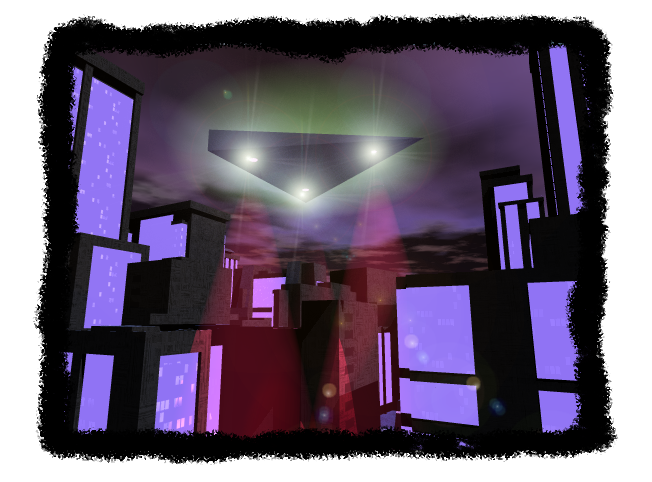
A CGI reconstruction/illustration based on collected witness testimonies of the Belgian UFO wave, showing the triangular craft with lights underneath.
📷 Wikimedia Commons · Public domain · See Commons page

The F-16 Fighting Falcon was the fighter jet used by the Belgian Air Force during the March 30, 1990 intercept attempts. Two F-16s were scrambled from Beauvechain Air Base.
📷 Wikimedia Commons · Public domain · See Commons page

A Belgian Air Force F-16 fighter jet in flight, representative of the interceptors scrambled during the March 30, 1990 UFO chase.
📷 Wikimedia Commons · CC BY 2.0 · See Commons page

Another image of a Belgian Air Force F-16, the type used in the 1990 intercept.
📷 Wikimedia Commons · CC BY 2.0 · See Commons page

The F-117 Nighthawk stealth aircraft was initially suspected as a possible explanation for the Belgian sightings. General Wilfried De Brouwer contacted US authorities, who confirmed no USAF stealth aircraft were operating in the area during the sightings.
📷 Wikimedia Commons · CC BY-SA 3.0 · See Commons page
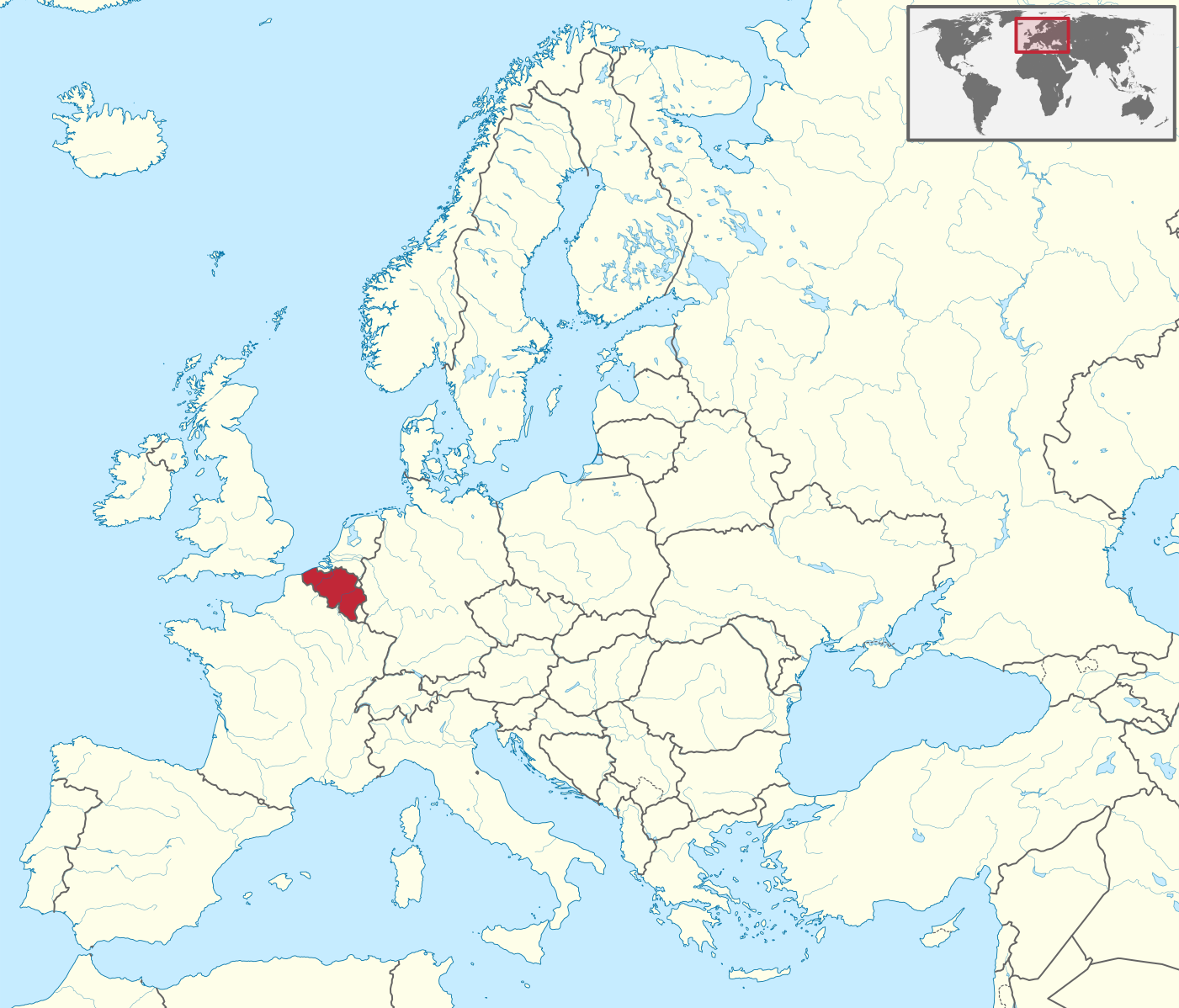
Map showing the location of Belgium within Europe.
📷 Wikimedia Commons · CC BY-SA 3.0 · See Commons page

Detailed map of Belgium showing the locations of key sightings including Eupen, Wavre, Glons, Semmerzake, and Beauvechain Air Base.
📷 Wikimedia Commons · CC BY-SA 3.0 · See Commons page

Semmerzake housed a Traffic Center Control that tracked one of the objects on radar during the March 30, 1990 events, leading to the scramble order for the F-16s.
📷 Wikimedia Commons · CC BY-SA 4.0 · See Commons page

Beauvechain Air Base was the origin of the two F-16 fighters scrambled to intercept the unknown objects on the night of March 30–31, 1990.
📷 Wikimedia Commons · CC BY-SA 4.0 · See Commons page

The Atomium, Brussels' most iconic landmark. The Belgian UFO wave included sightings reported across the Brussels region.
📷 Wikimedia Commons · CC BY-SA 3.0 · See Commons page

A historical radar scope display of the type conceptually similar to those used by Belgian military radar operators. During the March 1990 intercept, radar operators tracked sporadic contacts that were later attributed to Bragg scattering (atmospheric interference).
📷 Wikimedia Commons · Public domain · See Commons page

A Plan Position Indicator radar scope, representative of the type of radar display used at the Glons Control Reporting Center (CRC) and Semmerzake Traffic Center during the 1990 events.
📷 Wikimedia Commons · Public domain · See Commons page

A view of the Hautes Fagnes area near Eupen, Belgium. The Belgian UFO wave began on November 29, 1989, when two gendarmes in Eupen reported seeing a large, silent triangular object at low altitude.
📷 Wikimedia Commons · CC BY 4.0 · See Commons page

A high-resolution image of an F-16 Fighting Falcon in flight, the type of aircraft used by the Belgian Air Force during the 1990 UFO intercept.
📷 Wikimedia Commons · Public domain · See Commons page
A Belgian Air Force F-16 photographed on the ground, representing the type scrambled from Beauvechain Air Base.
📷 Wikimedia Commons · CC BY 2.0 · See Commons page
A months-long wave of mass sightings that began with two gendarmes on patrol in Eupen and peaked with F-16 intercepts over Belgium — the most extensively documented UFO wave in European history.
On November 29, 1989, two gendarmes on routine patrol in Eupen, Belgium — Heinrich Nicoll and Hubert von Montigny — reported seeing a large, silent, triangular object with three bright lights hovering just above the treetops. They described the lights as being as bright as floodlights on a football pitch. Nicoll called their dispatcher. This single report triggered what would become one of the most extensively documented UFO waves in history.
Over the following days, the story spread. The civilian UFO group SOBEPS (Société Belge d'Étude des Phénomènes Spatiaux) became the media's primary source. Reporter Heinz Godessart broke the story in the Grenz Echo. Physics professor Auguste Meessen interviewed the gendarmes and began building the case. Within a week, 143 people claimed to have witnessed objects on the first night — though all reports were filed after media solicitation. Over the next five months, hundreds more sightings were reported across Belgium, mostly of large, dark, triangular objects with lights underneath, flying at low altitude.
The wave peaked on the night of March 30–31, 1990. The supervisor at the Control Reporting Center (CRC) at Glons received reports of three unusual lights. The Traffic Center Control at Semmerzake tracked an object on radar. An order was given to scramble two F-16 fighters from Beauvechain Air Base. Over the next hour, the F-16s made repeated interception attempts and recorded a series of short radar contacts. The pilots never visually saw an unidentified object. The 2025-released Salmon report analyses 13 contacts and identifies contacts 8, 9 and 10 as the other F-16, while showing how filtering and target switching can distort several of the more dramatic reconstructed tracks. Other radar contacts were attributed to Bragg scattering, a well-known atmospheric phenomenon that produces "angel echoes" — false radar returns caused by inhomogeneities in air density.
In April 1990, the famous "Petit-Rechain photo" was released anonymously — a black triangular object with three lights at its corners. It was published in newspapers worldwide and examined by NASA, the French CNRS, and the Belgian Royal Military Academy. None could definitively prove it was fake. For over twenty years, it stood as the most iconic piece of physical evidence from the wave. On July 26, 2011, photographer Patrick Maréchal confessed on Belgian TV that it was a hoax: a polystyrene triangle painted black with three flashlight bulbs, hung from a string. He demonstrated the construction and showed his outtakes.
General Wilfried De Brouwer, Chief of Operations of the Belgian Air Staff, was tasked with handling the wave from the military side. He initially suspected experimental American stealth aircraft and formally inquired with US authorities, who confirmed no USAF stealth aircraft were operating in the area. The Belgian military showed an unprecedented level of transparency — releasing a detailed report on the March 30–31 intercept, acknowledging the radar data, and openly cooperating with SOBEPS. De Brouwer later wrote a detailed account for Leslie Kean's 2010 book, bringing the case to a wide English-language audience.
The case remains deeply polarized. SOBEPS collected over 2,600 written reports and published two thick volumes arguing the objects were genuine and likely extraterrestrial. Skeptics, led by Marc Hallet, Jean-Michel Abrassart, and Brian Dunning, argue the wave was a textbook psychosocial phenomenon — a mass delusion driven by media coverage and SOBEPS solicitation, with the original sighting likely a helicopter and the radar contacts explained by atmospheric interference. The debate continues to this day, making the Belgian UFO Wave a defining case study in the history of UAP research.
From the first sighting in Eupen through the F-16 intercept, the Petit-Rechain photo hoax confession, and the ongoing debate — the complete chronology of the Belgian UFO Wave and its aftermath.
The wave begins. Two gendarmes (Heinrich Nicoll and Hubert von Montigny) on routine patrol in Eupen report a large, silent, triangular object at low altitude with three bright lights. Over the following days, SOBEPS and media solicit additional reports. Eventually 143 people claim to have witnessed objects on this night, though all reports were filed after the fact, following media solicitation.
Reports spread. SOBEPS becomes the media's primary source on UFOs. The story is first broken by Grenz Echo reporter Heinz Godessart. SOBEPS investigator Auguste Meessen interviews the gendarmes and begins building the case. Additional sightings are reported across Belgium.
The wave continues. Hundreds of additional sightings are reported across Belgium, mostly of large, dark, triangular objects with lights underneath, flying at low altitude. Many reports are filed weeks or months after the events, prompted by media coverage and SOBEPS solicitation.
The peak night begins. The supervisor at the Control Reporting Center (CRC) at Glons receives reports of three unusual lights moving toward Thorembais-Gembloux, southeast of Brussels. Glons CRC requests the Wavre gendarmerie send a patrol to confirm the sighting.
A second set of lights is reported moving toward the first triangle. Traffic Center Control at Semmerzake tracks an object on radar. An order is given to scramble two F-16 fighters from Beauvechain Air Base.
F-16 intercept attempts. Over the next hour, two scrambled F-16s attempt nine separate interceptions. On three occasions, they obtain brief radar locks — later shown to be locks on each other (the other F-16). The pilots never visually see any objects. Other radar contacts are attributed to Bragg scattering (atmospheric interference / 'angel echoes'). Final confirmed radar lock at 00:40. F-16s return to base shortly after 01:00.
The Wavre gendarmerie patrol reports four lights in a square formation making jerky movements, which gradually dim and disappear in four separate directions. They also report a low engine noise and something resembling a stick with a turbine — suggesting a helicopter.
The Petit-Rechain photo is taken and released anonymously. The image of a black triangle with three lights becomes the most famous UFO photo of the wave, published in newspapers worldwide. It is examined by NASA, CNRS, and the Royal Military Academy, none of which can prove it is fake.
The wave gradually subsides. SOBEPS continues collecting reports, eventually totaling over 2,600 written sightings. The Belgian military releases a report on the March 30–31 intercept. General De Brouwer contacts US authorities, who confirm no stealth aircraft were operating in the area.
SOBEPS publishes 'Vague d'OVNI sur la Belgique' (Volume 1), documenting over 1,000 sightings and concluding the objects were genuine and likely extraterrestrial. Auguste Meessen is lead author.
Marc Hallet publishes 'La Vague OVNI Belge ou le triomphe de la désinformation,' the first major skeptical critique, arguing the wave was a mass delusion boosted by SOBEPS misinformation.
Pierre Magain and Marc Remy publish an article in Physicalia Magazine with conclusions that contradict SOBEPS, suggesting the wave should be studied by social scientists, not physicists.
SOBEPS publishes Volume 2 of 'Vague d'OVNI sur la Belgique,' incorporating findings from the classified Gilmard-Salmon report (obtained through professional channels). Meessen revises his radar analysis to acknowledge 'angel echoes.'
Renaud Leclet publishes 'The Belgian UFO Wave of 1989–1992: A Neglected Hypothesis,' arguing that many sightings were helicopters and that 'silence' claims could be explained by automobile noise and wind.
Leslie Kean publishes 'UFOs: Generals, Pilots, and Government Officials Go on the Record,' opening with General Wilfried De Brouwer's detailed account of the Belgian wave, bringing the case to a wide English-language audience.
Patrick Maréchal confesses on Belgian TV (RTL-TVI) that the Petit-Rechain photo was a hoax — a polystyrene triangle painted black with three flashlight bulbs, hung from a string. He demonstrates the construction and shows outtakes. Belgian UFO researchers who promoted the photo accept the confession.
Brian Dunning publishes the Skeptoid podcast episode 'The Belgian UFO Wave,' providing a comprehensive skeptical analysis that challenges the pro-UFO narrative, including that all three F-16 radar locks were on each other and that other contacts were Bragg scattering.
Jean-Michel Abrassart completes his PhD thesis at Université Catholique de Louvain on the psychosocial model of UFO phenomena, using the Belgian wave as a primary case study.
Belgian Defence releases a partially redacted 173-page technical report directed by Lt. Col. Salmon on the March 30–31, 1990 F-16 radar echoes. The report analyses 13 contacts, identifies contacts 8, 9 and 10 as the second F-16, and explains how Kalman-filter extrapolation, fictitious tracks and target switching can create apparently extraordinary motion.
Eleven key figures in the case — from the two gendarmes who triggered the wave, to the F-16 pilots and radar operators, the SOBEPS investigators, the military general who oversaw the intercept, the photographer who confessed the hoax, and the skeptics who challenged the narrative.
Gendarme (police officer), Eupen
Credibility: 🟢 Reliable (trained military/civilian professional, on-site observer)
On November 29, 1989, Nicoll and his partner Hubert von Montigny were on routine patrol in Eupen when they spotted a large, triangular craft with bright lights silently floating just above the treetops. They described the lights as being as bright as floodlights on a football pitch. This was the sighting that triggered the entire Belgian UFO wave. Nicoll called their dispatcher to report the object.
Gendarme (police officer), Eupen
Credibility: 🟢 Reliable (trained military/civilian professional, on-site observer)
Partner of Heinrich Nicoll. Together they reported the first sighting of the Belgian UFO wave on November 29, 1989 — a massive triangular object hovering silently at low altitude over Eupen. Their report was the catalyst that brought SOBEPS and media attention to the wave.
Professor of Physics, SOBEPS investigator and lead author
Credibility: 🟢 Reliable (trained military/civilian professional, on-site observer)
Meessen was a physics professor at Belgium's largest French-speaking university and one of the primary investigators for SOBEPS. He interviewed the original gendarme witnesses, became the media's main source on UFOs, and was lead author of 'Vague d'OVNI sur la Belgique.' He argued the objects were 'of extraterrestrial origin' — 'the only reasonable hypothesis.' He later obtained a copy of the classified Gilmard-Salmon report and revised his radar analysis.
Chief of Operations, Belgian Air Staff
Credibility: 🟢 Reliable (trained military/civilian professional, on-site observer)
De Brouwer was tasked with handling the UFO wave from the military side. He oversaw the F-16 intercept operations on March 30, 1990, and initially suspected experimental American stealth aircraft. He contacted US authorities, who confirmed no USAF stealth aircraft were operating in the area. He later stated: 'The technical evidence was insufficient to conclude that abnormal air activities took place during that evening.' He wrote a detailed account for Leslie Kean's 2010 book.
Belgian Air Force officer, base duty officer
Credibility: 🟢 Reliable (trained military/civilian professional, on-site observer)
Lambrechts wrote the chronological journal of the March 30–31, 1990 events — the primary military report of the night's F-16 intercept attempts, radar contacts, and communications. His report is the key official document of the intercept.
Photographer (hoaxer of the Petit-Rechain photo)
Credibility: 🟢 Reliable (trained military/civilian professional, on-site observer)
Maréchal took the famous 'Petit-Rechain photo' in April 1990 — a black triangular object with three lights. He released it anonymously and it was widely published worldwide and examined by NASA, CNRS, and the Royal Military Academy. On July 26, 2011, he confessed on Belgian TV (RTL-TVI) that it was a hoax: a polystyrene triangle painted black with three flashlight bulbs, hung from a string. He demonstrated how he created it and showed his outtakes.
Gendarmes dispatched from Wavre to confirm sighting
Credibility: 🟢 Reliable (trained military/civilian professional, on-site observer)
Dispatched by Glons CRC to confirm the initial March 30, 1990 sighting. They reported four lights in a square formation making short jerky movements, which gradually dimmed and disappeared in four separate directions around 01:30. They also reported hearing a low engine noise and seeing something resembling a stick with a turbine on it — leading many to conclude the object was a helicopter.
Belgian psychologist, skeptical researcher
Credibility: 🟢 Reliable (trained military/civilian professional, on-site observer)
Abrassart wrote his PhD thesis on the psychosocial model of UFO phenomena, using the Belgian UFO wave as a primary case study. He argued that the wave does not contradict the psychosocial hypothesis and that the initial 143 reports were collected only after a week of aggressive media solicitation by SOBEPS.
Journalist, Grenz Echo (German-language Belgian tabloid)
Credibility: 🟢 Reliable (trained military/civilian professional, on-site observer)
Godessart was the reporter who first interviewed the two Eupen gendarmes about their November 29, 1989 sighting, breaking the story in the Grenz Echo. He was described as a lifelong believer in alien visitation, which skeptics note may have influenced the initial framing of the story.
Skeptical UFO investigator
Credibility: 🟢 Reliable (trained military/civilian professional, on-site observer)
Leclet wrote a detailed article ('The Belgian UFO Wave of 1989–1992: A Neglected Hypothesis') concluding that the original November 29 sighting was almost certainly a Bell UH-1 Huey helicopter in the area. He noted that witnesses' claims of 'silence' could be explained by automobile engine noise or wind, and that the gendarmes actually reported a 'low noise,' not silence.
SOBEPS president/founder
Credibility: 🟢 Reliable (trained military/civilian professional, on-site observer)
Clerebaut was a key figure in SOBEPS, the civilian UFO investigation organization that collected and documented over 2,600 reports during the wave. SOBEPS coordinated with the Belgian military — an unprecedented level of military-civilian cooperation in UFO investigation.
Start with the records that can now be checked directly: the 2025-released Salmon F-16 radar report, Belgian Air Force radar charts, the contemporary Belgian Air Force chronology, UK government files, and the wider police/military paper trail. Secondary summaries are kept subordinate to those primary records.
The official Belgian Air Force (Air Component) report detailing the events of the night of March 30–31, 1990, including the scramble of two F-16s, radar contacts, and intercept attempts. Written by Major Lambrechts as a chronological journal of the night's events. The report documented nine intercept attempts, three brief radar locks (later shown to be locks on the other F-16), and sporadic radar contacts attributed to Bragg scattering.
Contains: Chronological log of the night's events, radar data, F-16 intercept attempts, gendarmerie reports
View source →The engineering analysis of the 30–31 March 1990 F-16 radar episode. It reconstructs 13 contacts, identifies contacts 8, 9 and 10 as the wingman F-16, and examines Kalman-filter extrapolation, fictitious tracks, target switching and atmospheric/radar effects. It is the essential document for evaluating claims of extraordinary speed or acceleration from the cockpit radar plots.
Contains: 13-contact reconstruction, F-16 geometry, 30 fps radar-video analysis, Kalman filter behaviour, target switching, radar interpretation
Open released report →The plotted radar material associated with the intercept night. These charts are historically important, but should be read alongside the Salmon engineering report rather than treated as self-explanatory proof of one object performing every apparent manoeuvre.
Contains: radar-contact plots, trajectory graphics, interception context
Open radar charts →Declassified UK Ministry of Defence UFO files that reference the Belgian UFO wave. Each UK MP was given a document mentioning the Belgian sightings. The file documents how the UK tracked the Belgian events and the radar-visual reports from March 1990.
Contains: UK government assessment of the Belgian UFO wave, references to Belgian Air Force F-16 scramble, radar data
View source →The UK National Archives' collection of postwar UFO reports, which includes the 1990 Belgian UFO wave as a major event. Documents how large unknown triangular-shaped objects were reported over Belgium on 30–31 March 1990, following months of strange sightings.
Contains: Overview of Belgian sightings, F-16 scramble documentation, gendarmerie reports
View source →Radar data from the Control Reporting Center (CRC) at Glons and the Traffic Center Control at Semmerzake, which tracked objects on the night of March 30, 1990. The Glons CRC received the initial reports of unusual lights and coordinated with the Wavre gendarmerie. Semmerzake tracked an object on radar, prompting the scramble order for the F-16s.
Contains: Rar contacts, track data, scramble orders, gendarmerie coordination
View source →General Wilfried De Brouwer, Chief of Operations of the Belgian Air Staff at the time, was tasked with handling the UFO wave. He produced analyses of the sightings and initially interpreted them as possibly caused by experimental American stealth craft. US authorities confirmed no USAF stealth aircraft were operating in the area. De Brouwer later contributed to Leslie Kean's book with a detailed account.
Contains: Military assessment, F-16 intercept analysis, US stealth aircraft inquiry, official conclusions
View source →The Petit-Rechain photograph was examined by NASA, the French National Centre for Scientific Research (CNRS), and the Belgian Royal Military Academy. None could positively identify the object or find obvious signs of fakery — though it was later confirmed as a hoax in 2011.
Contains: Photographic analysis, image authentication, inability to identify or disprove
View source →The Wavre gendarmerie was dispatched by the Glons CRC to confirm the initial sighting on March 30, 1990. They reported four lights arranged in a square formation making short jerky movements, which gradually lost luminosity and disappeared in four directions. They also reported a low engine noise and something resembling a stick with a turbine — leading many to conclude the object was a helicopter.
Contains: Visual observations, sound descriptions, movement patterns, object disappearance
View source →The strongest conventional case is now more precise than “the F-16s locked onto each other.” The 2025 Salmon report shows a mixture of wingman identifications, short-lived radar contacts, filtering artefacts, target switching and uncertain returns. Those findings matter, but they apply to the March 1990 radar episode rather than automatically identifying every police and civilian sighting in the wider wave.
Proposed by: Marc Hallet (1992), Jean-Michel Abrassart, Brian Dunning (Skeptoid)
The Belgian UFO wave was a mass delusion driven by media coverage and SOBEPS solicitation. Following 'Klass's Law,' once news coverage leads the public to believe UFOs may be nearby, numerous natural and man-made objects take on unusual characteristics in the minds of hopeful viewers. Their reports add to mass excitement, encouraging more observers, creating a self-reinforcing cycle until media interest fades. The 143 initial reports were only collected after a week of aggressive media solicitation — not independently on the first night. All 2,600+ reports were filed after the fact.
Proposed by: Renaud Leclet (2008)
Many sightings, including the original November 29, 1989 Eupen sighting, can be explained by helicopters. The gendarmes actually reported a 'low noise' (not silence), and one witness described 'a stick coming out one end with a turbine on it' — consistent with a helicopter. The perceived 'silence' could be due to witnesses' own automobile engine noise or wind direction. Leclet concluded the original sighting was almost certainly a Bell UH-1 Huey helicopter in the area, and that a stationary white light above Lake Gileppe was the planet Venus.
Proposed by: Belgian Royal Military Academy (Gilmard-Salmon report), Brian Dunning
The radar contacts during the March 30–31, 1990 F-16 intercept were the result of Bragg scattering — a well-known atmospheric phenomenon where random inhomogeneities in air density produce 'Clear-Air Echoes' (called 'angels') that cause false radar returns. The classified Gilmard-Salmon report found angel echoes to be the only interesting thing in the air that night. Of the nine reported radar locks by SOBEPS, the Belgian military only confirmed three — and analysis showed all three were locks on the other F-16, not on unknown objects.
Proposed by: Belgian Air Force analysis, Brian Dunning
SOBEPS reported that F-16s obtained radar locks on unknown targets nine times. However, the Belgian military's own analysis confirmed only three locks, and all three were the F-16s locking onto each other. The pilots never visually saw any objects, reported no unusual maneuvers, and never obtained a lock on anything other than the other F-16.
Proposed by: Patrick Maréchal (confession), Brian Dunning, Belgian UFO researchers (accepted)
On July 26, 2011, photographer Patrick Maréchal confessed that the famous Petit-Rechain photo was a hoax. He constructed it from a polystyrene (styrofoam) triangle painted black, with a flashlight bulb embedded in each corner, suspended from a string. He demonstrated the construction on Belgian TV and showed outtakes from his photo session. Despite being examined by NASA, CNRS, and the Royal Military Academy, none had been able to identify it as fake. The hoax was emblematic of the overall quality of evidence in the Belgian wave.
Proposed by: Pierre Magain and Marc Remy (1993, Physicalia Magazine)
Physicists Magain and Remy published an analysis in Physicalia Magazine whose conclusions did not match those of SOBEPS. They suggested the Belgian UFO wave would be better studied by people in the human sciences (psychologists, sociologists) than by physicists — implying a psychosocial rather than physical explanation.
Proposed by: Brian Dunning
If 13,500 people actually saw something they took for a UFO at the time, one would expect far more than a single photograph to result. The fact that only one questionable photograph (later confirmed hoax) was produced during a year of mass sightings in a developed country is itself strong evidence against a physical phenomenon. Dunning called the single photo 'emblematic of the quality of all the evidence that characterized the Belgian UFO Wave.'
Proposed by: Brian Dunning, Jean-Michel Abrassart
Contrary to later retellings, the 143 initial November 29 reports were not filed independently on that night — they were collected over the following week through aggressive media solicitation by SOBEPS. All 2,600+ reports were filed after the events, prompted by newspaper articles instructing people to send reports to SOBEPS. This pattern is consistent with retroactive reinterpretation of ordinary observations.
The Belgian UFO Wave didn't just make headlines — it engaged a significant fraction of a small nation's population, established unprecedented military-civilian cooperation, created the "black triangle" archetype that shaped UFO reporting worldwide, and dealt a lasting blow to credibility when its most famous photo was revealed as a hoax.
Over the course of approximately five months (November 1989 to April 1990), more than 2,600 written reports were collected by SOBEPS. The number of total witnesses (including those who did not file written reports) has been estimated at over 13,500. For a small country like Belgium, this represented a significant fraction of the population becoming aware of and engaged with the phenomenon.
The Belgian military showed an unprecedented level of openness. Rather than dismissing or hiding the sightings, the Belgian Air Force released a detailed report on the March 30–31 intercept, acknowledged the radar data, and openly cooperated with the civilian UFO group SOBEPS. General Wilfried De Brouwer, Chief of Operations, publicly stated the military could not identify the objects. This level of transparency was highly unusual for any military dealing with UFO reports and stood in stark contrast to the secrecy of other nations.
The Société Belge d'Étude des Phénomènes Spatiaux (SOBEPS) became the central civilian investigation body, collecting over 2,600 reports and publishing two thick volumes ('Vague d'OVNI sur la Belgique'). The military-civilian cooperation was unprecedented: SOBEPS was given access to military radar data and even obtained a copy of the classified Gilmard-Salmon report through professional channels. This model of military-civilian UFO cooperation has rarely been replicated.
When Patrick Maréchal confessed in 2011 that the Petit-Rechain photo was a hoax, it dealt a significant blow to the credibility of the Belgian UFO wave narrative. The photo had been the case's most famous piece of physical evidence — examined by NASA, CNRS, and the Royal Military Academy. Its exposure as a polystyrene model confirmed skeptics' arguments and illustrated how even 'expert-analyzed' evidence can be faked. However, some researchers noted that one fake photo did not discredit the entire wave, given the thousands of witness reports.
The Belgian media covered the UFO wave extensively over a period of years. In a small country with a shared media landscape, the story reached near-saturation, contributing to what skeptics called a self-reinforcing psychosocial cycle. The wave became a defining national event of the era, creating a sense of shared experience and wonder — as well as fear and confusion — across Belgian society.
The Belgian wave established the 'black triangle' as the defining UFO archetype of the 1990s. The description of large, dark, triangular objects with lights at the corners became a template that was reported in subsequent sightings worldwide, including the 1993 Cosford Incident in the UK and the 2000 Illinois mass sighting. The Belgian case shaped public expectations of what a UFO sighting 'should' look like for a generation.
The Belgian wave became a case study in the debate between the extraterrestrial hypothesis and the psychosocial hypothesis. It influenced how UFO researchers and skeptics alike approach mass sighting waves, the role of media in shaping witness reports, and the importance of contemporaneous versus solicited testimony. Jean-Michel Abrassart's PhD thesis on the psychosocial model used the wave as its primary case study.
Sixteen surprising facts about the Belgian UFO Wave — from the 2,600+ written reports and the 2025-released Salmon radar analysis, to the Petit-Rechain photo hoax, helicopter and astronomical alternatives, and the unusual openness of the Belgian military response.
Nine books covering the Belgian UFO Wave — from the SOBEPS two-volume primary source and Leslie Kean's landmark featuring General De Brouwer, to Dolan's national security chronology, Marler's triangular UFO study, Klass's skeptical framework, and Abrassart's PhD thesis on the psychosocial model. Links support The UAP Map via Amazon Associates.
The primary source document for the Belgian UFO wave. Two thick volumes documenting over 1,000 UFO sightings collected by SOBEPS during the wave. Lead author Auguste Meessen, a physics professor, argued that 'the only reasonable hypothesis is that of unidentified flying objects... of extraterrestrial origin.' The second volume incorporated findings from the classified Gilmard-Salmon report. Remains the most comprehensive pro-UFO account of the wave.
View source →Leslie Kean's landmark book opens with Belgian Major General Wilfried De Brouwer's detailed account of the Belgian UFO wave, making it the most prominent English-language source on the case from a military insider's perspective. De Brouwer describes the F-16 intercepts, radar data, and the military's inability to identify the objects.
View on Amazon →The first volume of Dolan's two-part chronological history of the national security dimensions of the UFO phenomenon. Provides context for government UFO investigations and secrecy relevant to cases like the Belgian wave.
View on Amazon →The second volume of Dolan's series, covering the UFO phenomenon through 1991. This volume covers the period of the Belgian UFO wave (1989–1990) and discusses the case in the context of global UFO history.
View on Amazon →A comprehensive study of triangular UFO sightings throughout history, including extensive coverage of the Belgian UFO wave as the defining case of the black triangle phenomenon. Marler documents historical cases and validates patterns in triangular UFO reports.
View source →Philip Klass's skeptical work that established 'Klass's Law' — the principle that media coverage of UFOs creates a self-reinforcing cycle of misidentification and mass reporting. This law was later applied by skeptics to explain the Belgian UFO wave as a psychosocial phenomenon.
View source →A Belgian psychologist's doctoral thesis on the psychosocial model of UFO phenomena, using the Belgian UFO wave as a primary case study. Argues that the wave does not contradict the psychosocial hypothesis and provides the leading science-based skeptical explanation.
View source →One of the earliest skeptical critiques of the Belgian UFO wave, arguing that SOBEPS was spreading misinformation in the media and that the wave was a mass delusion boosted by the organization's activities.
View source →A detailed skeptical analysis arguing that many Belgian UFO wave sightings can be explained by helicopters. Addresses the 'silence' reported by witnesses by noting that engine noise could be masked by witnesses' own automobile engines or wind conditions.
View source →Ten videos — documentaries about the Belgian UFO Wave and the black triangle mystery, F-16 intercept footage, General De Brouwer's presentation on the March 30, 1990 peak, radar analysis, and Brian Dunning's Skeptoid podcast episode providing the skeptical analysis. Click any thumbnail to play.
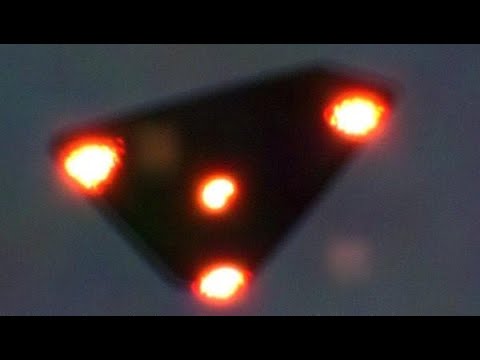
nexusaliens
Documentary covering the Belgian UFO wave, including the 13,500+ witnesses and black triangle sightings.
Watch on YouTube →
Unknown
Documentary examining the black triangle mystery of the Belgian UFO wave.
Watch on YouTube →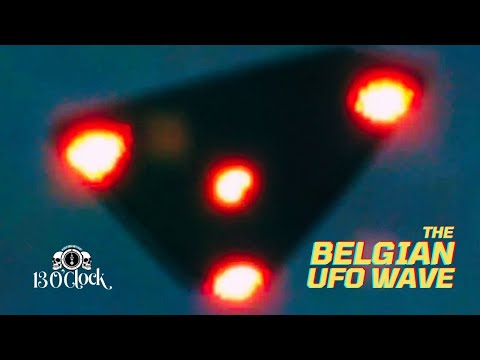
Unknown (Skeptical/Astronomy podcast)
Live episode examining the Belgian UFO Wave and considering the likelihood that the sightings were actually alien visitors.
Watch on YouTube →
The Proof Is Out There (History Channel)
History Channel episode examining the Belgian UFO that allegedly defied physics.
Watch on YouTube →
Unknown
Documentary about the influx of UFO sightings reported near Brussels, Belgium over the course of 5 months.
Watch on YouTube →
Antoine Wielen
Overview documentary of the Belgian UFO Wave of 1989–1990.
Watch on YouTube →
Unknown
Video covering the F-16 UFO intercept by the Belgian Air Force in 1990, noting the cohesion and surrealism the UFO wave brought to Belgium.
Watch on YouTube →
Unknown
Presentation by General Wilfried De Brouwer covering the peak of the Belgian UFO wave on March 30, 1990, including radar data and F-16 intercept details.
Watch on YouTube →
Unknown
Documentary about how Belgium became the center of one of the most credible UFO waves in modern history, featuring silent black triangles and radar locks.
Watch on YouTube →Brian Dunning / Skeptoid
Brian Dunning's detailed skeptical analysis of the Belgian UFO wave, covering the F-16 chase, radar data, the Petit-Rechain photo hoax, and the psychosocial explanation.
Listen →The Belgian Wave deserves its Tier 1 status not because thousands of reports can be treated as thousands of independent confirmations, and not because one dramatic photograph showed a black triangle. That photograph was a hoax and should be removed from the evidence column entirely.
The case survives because its strongest elements lie elsewhere. Named police officers reported extraordinary lights at the beginning of the wave. Similar reports continued across the region. The Belgian Air Force engaged openly with the problem. On 30–31 March 1990, visual reporting and ground radar contributed to the decision to launch two F-16s. Their radars recorded intermittent contacts. The pilots did not visually acquire an object, and later technical analysis makes the wildest acceleration claims much less secure than popular retellings suggest.
That is not a disappointing ending for a UFO enthusiast. It is precisely why Belgium remains important. After the weakest material is stripped away, there is still a serious historical question: **what generated the strongest police observations and enough military concern for Belgium to put fighters into the air?**
No single conventional explanation has been demonstrated for every strong report. At the same time, the wave almost certainly contains ordinary aircraft, celestial objects, expectation effects and radar artefacts among its long tail.
The famous Petit-Rechain photograph was a confessed model hoax. That removes the image as evidence, but it does not retroactively fabricate the earlier Eupen police reports or the later military response.
The released technical analysis shows that some dramatic radar trajectories can arise from wingman identification, Kalman-filter prediction, target switching and short-lived returns. The radar record is real; the most extreme performance interpretation is not secure.
Patrick Maréchal later said he made the image using a small model. It remains historically important because it shaped public memory of the wave, but it should not be counted as physical evidence.
Police testimony, civilian reports, military involvement, radar documentation, contemporary press coverage and later technical analysis create an unusually rich archive. The challenge is separating those layers rather than averaging them into one claim.
Do you have original Belgian gendarmerie reports, first-generation witness interviews, Air Force documents, radar plots, press photographs with clear provenance, or SOBEPS material that can be traced to the original observation? We especially want records that help separate individual sightings from the wider wave.
From late 1989 into 1990, Belgian police officers and civilians reported large, dark or triangular objects with lights moving across the country. The reports became especially significant when Belgian Air Force F-16s were scrambled and pilots attempted to intercept or track an object. General Wilfried De Brouwer later described the military response in public, while the wave continued to generate witness reports and press attention.
The case contains several different evidential layers: civilian observations, police reports, military radar and pilot testimony, and the famous photograph later associated with the wave. The photograph was presented as important evidence but was later admitted by its maker to be a hoax. That does not erase the wider wave; it does mean the image cannot carry the case by itself.
Belgian Wave is strongest as a study of many reports converging with an official response. The records do not establish that every witness saw the same object, and radar or pilot data must be assessed separately from the most dramatic civilian descriptions.
Officers and civilians report structured lights or triangular forms over parts of Belgium, beginning a sustained wave of attention.
Belgian Air Force aircraft are scrambled to investigate reported objects and pilots describe difficult intercept attempts.
Police, military officers, researchers and journalists assemble a large record of testimony, radar questions and photographs.
The famous triangular photograph is exposed as a hoax, forcing the broader case to stand on its independent reports.
Compare with Rendlesham Forest for another military record where official response and later interpretation must be separated.
Compare Belgium’s military response with the Calvine photograph and the Rendlesham record, two other cases where official attention and later interpretation diverged.