Radar cueing. Ground FLIR. Pilot NVGs. A serving intelligence officer watching with the naked eye. Then objects reported within feet of the helicopter.
This case does have government-released sensor imagery — but the pictures and the officer's written account are different evidence streams.

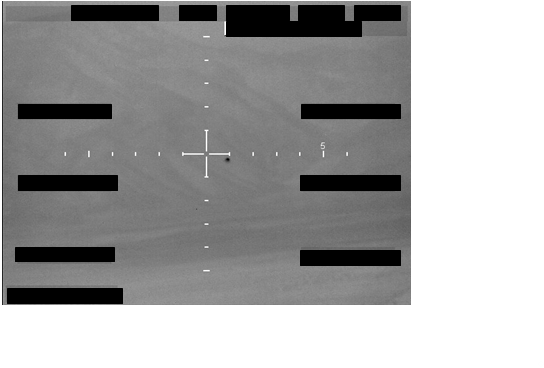
The PURSUE archive pairs ODNI-UAP-D001 with a 32-frame FBI image set from the same exercise. The B-series includes frames showing a helicopter and a second dark circular object below it; the A-series provides a separate sensor view with a small dark object near the reticle.
That pairing matters because it means the case is not testimony-only. It does not mean every visual claim in the officer's narrative is captured in these frames, and it does not supply the withheld raw radar, FLIR video or full telemetry needed to reconstruct speed, range or acceleration independently.
This is not an anonymous internet story that was later attached to the government. The government published the reporting officer’s own narrative.
ODNI-UAP-D001 says a senior U.S. intelligence officer left a Joint Operations Center in a helicopter with a colleague and two pilots to investigate unusual noises and recent UAP reports around a weapons test range. After sunset, the pilots shifted to FLIR and night-vision equipment while the officer continued observing with the naked eye.
The narrative then records radar tasking from the JOC, a ground team reporting a fast, hot-appearing object on FLIR, a close encounter near the helicopter, later groups of orange lights against a mountain backdrop, and repeated observations as fighter aircraft crossed the area.
That makes the file unusually rich by modern UAP standards. It also makes discipline essential. The public document is a first-person narrative. It is not the raw radar track, raw FLIR file, NVG recording or a calibrated range/speed dataset.
The case is strongest when its observation channels are kept separate.
The narrative says the JOC detected radar hits and redirected the helicopter toward them. No raw radar plot is included in ODNI-UAP-D001.
Ground teams reportedly tracked a hot-appearing, fast-moving object and radioed observations to the helicopter. Related government infrared imagery was released separately.
The pilots used night-vision goggles after sunset and reportedly observed the close object and later luminous formations.
The intelligence officer describes direct visual observations, including orange oval lights with lighter centres near the helicopter.
The two-page ODNI file is short enough to read in full — and important enough that summaries should not replace it.
A U.S. government release attributes the narrative to a serving senior intelligence officer; the file describes a helicopter mission, multiple human observers, radar cueing, ground FLIR reports, NVG observations and close-range luminous objects.
The exact site, raw radar data, native FLIR/NVG files, full operational logs, sensor geometry, calibrated range/speed information and independent witness identities are not available in the public narrative.
A sensitive test-range setting keeps ordinary and classified possibilities alive. Drones, test articles, flares, aircraft lights, sensor effects, atmospheric phenomena and multiple unrelated events all have to be considered before treating the narrative as evidence of one extraordinary craft.
At the same time, a blanket conventional explanation has not been demonstrated in the public release. The officer’s account describes repeated observations across multiple channels, including a close encounter and later formations. Without the underlying sensor record, the public cannot reproduce the geometry or performance.
The correct evidential posture is therefore neither dismissal nor certainty: this is a high-provenance government account with unusually interesting multi-channel claims and unusually important missing data.
A two-page first-person narrative released through the U.S. government’s PURSUE system on 22 May 2026 and attributed to a serving senior U.S. intelligence official describing a late-2025 helicopter UAP investigation.
The narrative says ground teams used FLIR and the pilots used NVGs, and the government release states that related infrared imagery from the exercise was released separately. The reporting officer explicitly says he did not take photographs during the close encounter.
The narrative says the Joint Operations Center reported radar hits and used them to redirect the helicopter. The raw radar data are not included in the public document.
No specific identification is provided in ODNI-UAP-D001. Publicly available material is insufficient to reconstruct all reported performance claims independently.
The released record gives only the western United States and describes a sensitive military test range. The precise location is withheld.
Primary: U.S. Department of War PURSUE record — ODNI-UAP-D001, USPER Narrative, Senior USIC Official.
Secondary verification: CBS News coverage of the May 2026 release; document mirrors used only for accessibility and cross-checking, not as replacements for the official record.
The most important fact about this case is not that a senior intelligence officer described extraordinary events. It is that the government released the account while withholding much of the data that would let outsiders test its most consequential claims. The narrative deserves attention. The missing sensor record deserves just as much.