LOCAL PRESS RETROSPECTIVE
VareseNews — Abbiate Guazzone
Useful Italian-language reconstruction preserving the local setting, 1952 publication gap, later witness quotations and the disappearance of the physical samples.
OPEN SOURCE →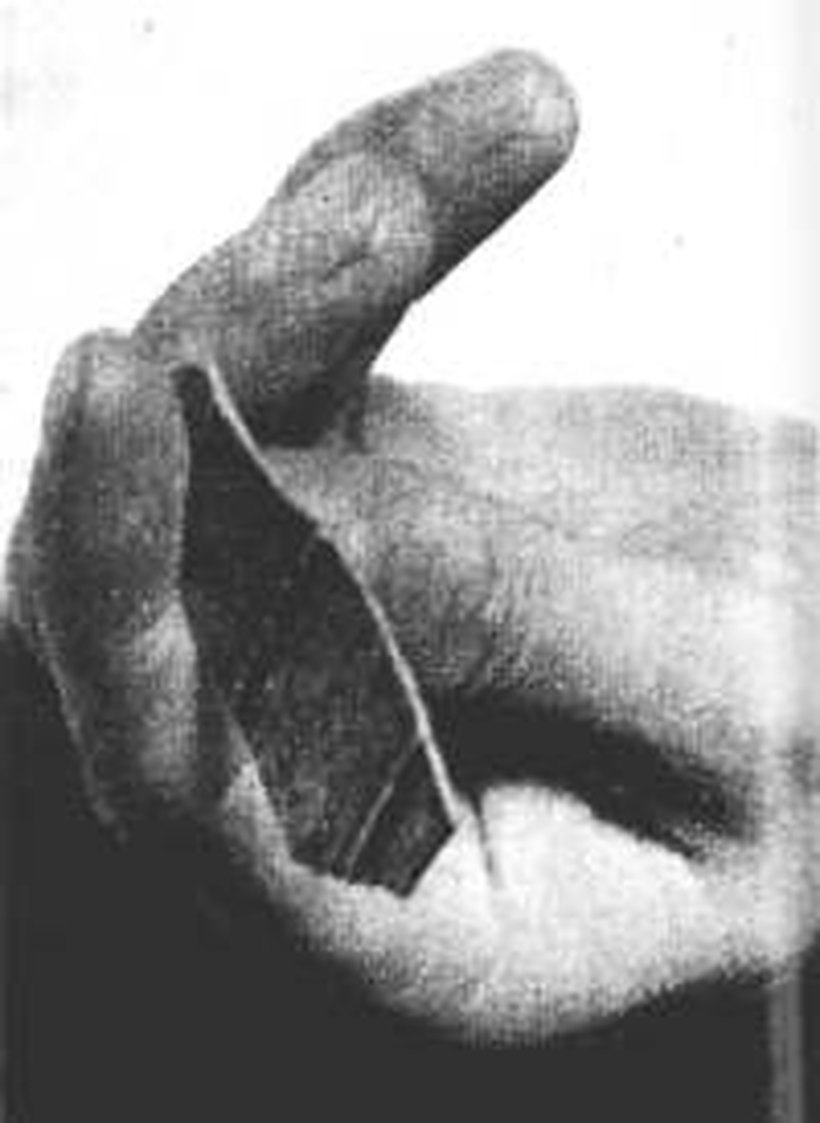
Bruno Facchini walked toward flashes in a storm-dark field expecting a fault on the power line. Instead, he said he found a huge metallic object, three or four suited figures and one of the strangest workmanlike close encounters in early UFO history.
Facchini's account is memorable because it is not built like a later abduction narrative. He did not describe being invited aboard, subjected to an examination or given a message for humanity. He described mechanics.
He was a 40-year-old factory worker living at Abbiate Guazzone near Tradate. A violent thunderstorm had passed. At about ten at night he stepped outside toward the external toilet, paused for a cigarette and noticed intermittent flashes near a pylon perhaps a couple of hundred yards away. He initially assumed there was a fault on the electrical line or somebody working there and walked toward the light because he thought help might be needed.
As he approached, he later said the air felt unusually warm and a continuous buzzing filled the area — compared in later accounts to a giant beehive or an electrical generator. The flashes were not moving across the sky. They seemed fixed near the ground.
What he said he found was a dark, flattened spherical machine with a gridded or panelled exterior, an open illuminated hatch, ladders, tubes, cylinders and gauges. Around it were three or four human-sized figures in heavy suits and masks. One appeared to be welding.
Facchini said he approached to within only a few metres. The figures moved slowly in close-fitting suits with transparent faceplates. Later descriptions add what appeared to be liquid or condensation inside the masks, breathing tubes hanging near the mouth and very pale human-looking faces behind the transparent fronts. He estimated their height at around 1.7 metres — human scale, not tiny “greys.”
That distinction matters historically. This is not a later template of small grey beings with oversized heads. Facchini described what looked more like technicians in pressure equipment working around machinery.
Believing them to be pilots or workmen in trouble, he called out in Italian and offered assistance. The reply, he said, was not language he recognised but guttural sounds and gestures.
Only then did fear take over. Facchini turned to run. Looking back, he said one figure raised a device carried near the body and aimed it at him. He described being hit in the back by something like a violent jet of compressed air, knocking him down onto a boundary stone.
From the ground he watched the work finish. The figures re-entered the machine, the ladder withdrew, the hatch closed and the buzzing increased. The object rose and moved away at speed.
Facchini notices fixed bursts of light near a power-line pylon and walks out to investigate.
He reports a large dark machine, suited figures, a ladder, internal equipment and what appears to be welding.
Facchini says a directed effect knocks him down; the figures finish, board and depart.
He returns and reports four circular impressions, scorched grass and pieces of metal.
The machine is one of the most mechanically detailed parts of the encounter, but every feature still comes through one witness. The right way to present it is as a witness-derived technical description, not as a reconstruction pretending to be a photograph.
A dark rounded body, broader than it was tall, with a regular grid of vertical and horizontal lines or panel divisions across the exterior.
Facchini described an illuminated rectangular opening and a ladder leading into the object, with further steps or a ladder visible inside.
Rows of bottle- or cylinder-like items, instruments and pipework were visible through the open section according to his account.
Later reconstructions describe a small platform or elevator-like device used by the occupants while working around the exterior.
One figure appeared to be using a bright tool on tubes or cylinders attached to the machine — interpreted by Facchini as welding.
The object was associated with persistent buzzing and, in later retellings, unusual warmth in the immediate area.
Facchini said the next morning he found four circular impressions roughly a metre across, arranged in a square about six metres on a side. Some grass appeared scorched. He also collected pieces of metal that he assumed were residue from the apparent welding operation.
Later case literature says police visited the site and saw the traces. It also says a doctor examined a darkened injury on Facchini's back several days later, and that he retained a scorched jacket and damaged boots. Period photographs of Facchini with clothing and fragments circulated in later UFO literature.
Those facts are useful only if the chain is kept straight. We have not recovered the original police report, the original medical report, or a contemporaneous forensic survey tying the ground marks to the night of 24 April. The traces are reported evidence, not laboratory-secured scene evidence.
Reported the next morning, about one metre wide and arranged in a square. No recovered contemporaneous measurement sheet or forensic site plan.
Later accounts describe a blackened mark, pain lasting weeks, plus retained clothing. Original medical documentation remains unrecovered.
The fragments were reportedly analysed multiple times. Their chemistry became the most testable part of the story — and the least exotic.
The fragments are the hinge of the case. According to the surviving literature, samples were sent to a metals research institute in Novara, which described them as heat-resistant antifriction material. Renato Vesco later characterised them as essentially bronze with a high tin content and traces of lead.
A composition often quoted in later literature is about 74% copper and 19% tin with trace elements. Whatever the exact report chain, the recurring finding is consistent: ordinary terrestrial metal, not an unknown element or anomalous alloy.
That does not prove the encounter was fabricated. It does strip the fragments of the strongest extraordinary interpretation. A piece of ordinary bronze can be associated with an unusual event, but its chemistry does not authenticate a non-human craft.
This is one of the most important limitations in the case. No newspaper account immediately following 24 April 1950 has been recovered. The earliest known press treatment is La Domenica del Corriere on 24 August 1952 — more than two years later.
Facchini said he had reported the event to police in Varese and was advised not to talk publicly, in some versions to avoid alarming the population. Police are also said to have visited the field. But the original police file has not been recovered in this research pass.
That means the police story must remain conditional: reported police involvement, not a recovered official file. Claims that military technicians also inspected the site are weaker still. Specialist source work has treated those statements cautiously as possible later press amplification rather than a secure contemporary fact.
Facchini says he sees the object, figures and departure.
Later accounts say police inspect the site and a doctor examines Facchini.
La Domenica del Corriere publishes the story with a dramatic Walter Molino illustration.
Italian researchers and later international writers re-interview Facchini and handle the fragments.
One reason Facchini remained important to later investigators is that the basic architecture of his story did not grow into an elaborate contactee mythology. He continued to describe a machine, suited figures, a directed blow, traces and fragments.
Later accounts say the publicity brought ridicule in the local area and that Facchini came to regret speaking publicly. That does not establish truthfulness, but it matters when assessing motive and story evolution: the case did not become a platform for repeated alien messages, prophecies or celebrity claims.
Facchini was re-interviewed decades later, including in 1981. Long-term consistency has evidential value only if weighed against the fact that all such interviews are remote from 1950. Repetition can preserve memory, but it can also preserve a story that has already stabilised.
Some later accounts introduced additional corroboration: unnamed neighbours said to have witnessed the event, and stories that Facchini's wife later saw unusual aerial objects herself.
Those claims are weaker than the core Facchini narrative because they enter the public record later and are poorly anchored to identifiable contemporary statements. A 1962 account is an important part of the case's source genealogy, but later Italian research has questioned aspects of that article and noted that family testimony does not line up cleanly across later interviews.
The editorial rule is simple: do not upgrade Facchini into a multiple-witness encounter unless the individual witnesses, dates and earliest statements can actually be recovered.
There is no demonstrated aircraft, hoax prop or named mundane mechanism that reproduces the whole encounter. The strongest countercase is structural rather than cinematic.
Facchini was alone. The event happened at night after a violent thunderstorm. The first public record arrives more than two years later. The claimed physical traces were never secured with a modern chain of custody. The police and medical documents have not been recovered. And the metal that can actually be discussed analytically was ordinary bronze-like material.
A deliberate hoax remains possible but unshown. Misperception plus a fall could explain injury, but not the entire reported repair scene. The lack of a method-shown conventional solution is why the case stays interesting — not why it should be treated as verified.
Original complaint, site-visit notes, names of officers and any photographs would transform the status of the official-handling claim.
Date, diagnosis, injury description and treatment would separate remembered medical narrative from contemporary documentation.
Exact lab names, methods, sample custody and a modern provenance-secure retest would settle the physical-evidence lane.
Useful Italian-language reconstruction preserving the local setting, 1952 publication gap, later witness quotations and the disappearance of the physical samples.
OPEN SOURCE →Useful source genealogy and bibliography. Explicitly notes that the best investigations were years later and the oldest known press source is August 1952.
OPEN SOURCE →Detailed reconstruction with period photographs, metal-analysis history and a useful caution around exaggerated police/military claims.
OPEN SOURCE →Strong modern synthesis for encounter chronology, material analysis, source genealogy, witness development and missing-evidence audit. Primary/earlier material outranks it where recovered.
OPEN SOURCE →Important for tracking how neighbour/family corroboration enters later literature and why Facchini should remain treated as a single-principal-witness case unless earlier independent statements are recovered.
OPEN SOURCE →If Bruno Facchini invented the encounter, the surviving record has not shown how or why. If he misperceived something ordinary, the mechanism has not been reconstructed. If he really encountered an unfamiliar machine, nearly every physical route to proving it has since degraded: no recovered police file, no original medical report, no surviving metal sample. What remains is a remarkably mechanical story, a handful of period photographs, ordinary bronze — and a question that has survived since 1950.