ROCKET
Kosmos-955 plume
By far the strongest conventional explanation for the famous Petrozavodsk jellyfish. Timing, location and visual form all fit well.
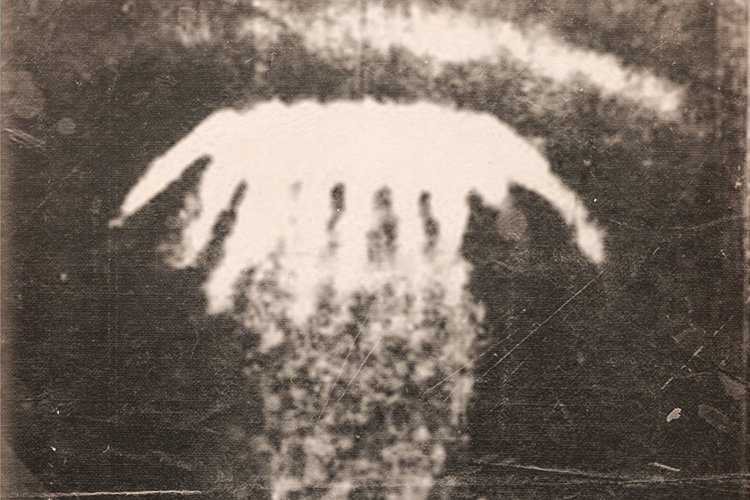
Before dawn, a brilliant form spread over Soviet Karelia, throwing down thin rays of light and triggering reports from a vast northern corridor. Soviet newspapers printed the story. Academy scientists investigated it. And at almost the same moment, a satellite lifted from a launch site the Soviet Union did not publicly admit existed.
In the early hours of 20 September 1977, people in and around Petrozavodsk reported a luminous object or cloud of extraordinary apparent size. Soviet press accounts described a huge star that expanded into something like a jellyfish, sending narrow beams downward before drifting away.
The reports were not confined to one street or one frightened witness. Similar luminous phenomena were reported across a broad area of northwestern Soviet territory and parts of northern Europe. That geographical spread made the event impossible to ignore and helped trigger scientific attention at a level unusual for Soviet UFO reports.
At the same time, a hard conventional fact sits at the centre of the case: the Soviet Union launched Kosmos-955, an electronic-intelligence satellite, from Plesetsk Cosmodrome at 01:01 UTC that morning using a Vostok-2M rocket. A high-altitude exhaust plume illuminated by sunlight while observers remained in darkness can produce exactly the kind of expanding luminous “jellyfish” now familiar from modern rocket launches.
That makes Petrozavodsk different from cases where a conventional explanation is added years later without a matching event. Here there really was a major rocket launch at almost exactly the right time. The unresolved part is whether that launch explains the whole reporting wave or only the most famous Petrozavodsk phase.
Contemporary Soviet reporting said the phenomenon became visible around 4 a.m. local time. Witnesses described an intense star-like source that brightened and expanded, producing a luminous dome or umbrella with thin rays extending beneath it.
The visual language is remarkably modern. Anyone who has seen photographs of high-altitude rocket plumes at twilight will recognise the broad family resemblance: a brilliant core, a swelling cloud and fine luminous filaments spreading through the upper atmosphere.
But witnesses did not know they were watching a classified or poorly publicised launch. In 1977, Plesetsk remained wrapped in secrecy. To a city below a dark sky, the phenomenon looked detached from any ordinary aircraft or rocket.
Some accounts described the object hovering or moving slowly over Petrozavodsk for several minutes. Others reported a more directional passage. This variation is important because a large high-altitude plume can look almost stationary from one position while appearing to move significantly from another.
An intense luminous source appears in the pre-dawn sky.
The glow expands into a large dome or umbrella shape with thin rays beneath.
The luminous form changes shape and appears to move away.
The case has a genuine historical visual record. Photographs and reproductions show the luminous umbrella or jellyfish shape that made the event famous. They are not proof of an exotic craft, but they are vastly more valuable than generic city scenery because they preserve the actual appearance that witnesses were trying to describe.


Kosmos-955 was a Soviet electronic-intelligence satellite launched from Plesetsk on 20 September 1977 at 01:01 UTC. The timing sits extremely close to the best-known Petrozavodsk observations.
Space historian James Oberg became strongly associated with the launch explanation. The mechanism is straightforward: at high altitude, exhaust gases expand enormously in thin air. Although observers on the ground are in darkness, the plume can rise into sunlight and glow intensely. The expanding cloud can form luminous shells, filaments and umbrella-like structures.
Modern rocket launches have made this effect familiar. In 1977 it was not. Soviet secrecy made it even less familiar because ordinary citizens were not told when military or reconnaissance spacecraft were being launched.
This explains why the launch hypothesis deserves to be the leading conventional account rather than a footnote. It matches the date, time, geography and visual morphology unusually well.
The original Soviet investigation noted reports from some locations that appeared to precede the 01:01 UTC launch. Those earlier timings are disputed and may reflect clock errors, conflated reports or separate phenomena — but they are part of why the Academy's initial analysis did not simply close the case immediately.
Lev Gindilis of the Sternberg Astronomical Institute, D. Menkov and I. Petrovskaya assembled a preliminary Academy-linked dossier from witness testimony, meteorological data, location reports and other observations. By 30 December 1977, the investigation had collected 85 witness reports. Their work did not treat the case as a single anonymous light over one city; it tried to reconstruct a geographically broad event.
Their early work did not produce a clean explanation. They considered Kosmos-955 but also noted apparent timing and motion problems. A dedicated meeting was held at the Institute of Space Studies in November 1977. Additional work continued into 1978.
On 1 November 1977, the Institute of Space Studies of the Soviet Academy of Sciences held a dedicated meeting on the phenomenon. The preliminary findings remained inconclusive. On 2 January 1978, Academy vice-president Vladimir Kotelnikov informed the Karelian branch that an expert group would travel to Petrozavodsk; the field team included Gindilis, A. N. Makarov, Inna Petrovskaya and Boris Sokolov.
Petrozavodsk became the immediate institutional trigger for a more organised Soviet system for collecting anomalous-atmospheric-phenomena reports. The Academy-side programme became known as Setka AN, paired with a Ministry of Defence track. Over the following years, Soviet investigators accumulated thousands of reports and increasingly found rocket and missile activity behind many spectacular wide-area luminous events.
That institutional history is important because it cuts both ways. The event was not dismissed as nonsense; it was investigated. But the eventual scientific trajectory moved toward a conventional space-launch interpretation rather than toward confirmation of an unknown vehicle.
Many witnesses reported a large luminous event over a wide area.
Historical images preserve the characteristic “jellyfish” appearance.
Kosmos-955 was genuinely launched from Plesetsk at almost exactly the relevant time.
Some timings and locations were harder to align cleanly with the launch and kept the debate open.
Modern upper-atmosphere rocket-plume physics makes the visual mechanism far easier to understand than it was in 1977. At high altitude, exhaust expands into a huge low-density cloud and can be illuminated by the Sun while observers below remain in darkness, creating the brilliant canopy, radial filaments and apparent “jellyfish” morphology now familiar from modern twilight launches.
The leading launch explanation is strongest for the famous Petrozavodsk “jellyfish” phase. The original Soviet investigation, however, preserved reports from places such as Palanga, Medvezhyegorsk, Loukhi, Kovdor and the Leningrad seaport that were timed before the 01:01 UTC launch.
That does not automatically defeat the rocket explanation. Witness clocks can be wrong, separate phenomena can be folded into one newspaper wave, and some early records are far less secure than the central Petrozavodsk observations. But it is a real source-layer problem: a launch cannot cause an observation that genuinely happened before ignition.
The correct editorial treatment is therefore not “rocket disproved” and not “every report explained.” It is to separate the best-correlated core event from the weaker outlier cluster and ask whether those reports belong to the same phenomenon at all.
Kosmos-955 is an unusually strong explanation for the iconic luminous jellyfish. The unresolved edge lies in whether the earlier and geographically wider reports are timing errors, separate stimuli or evidence that the 20 September wave contained more than one event.
From October 1977 into early 1978, residents of Petrozavodsk reported small holes appearing in window glass in different parts of the city. Some were near-circular; some were irregular; some were described as having smooth or apparently melted-looking edges. Because the famous sky display had been described as sending thin rays downward, the holes quickly became attached to the UFO narrative.
The Academy group treated the reports seriously enough to collect glass samples and involve specialist institutions. In spring 1978, the All-Union Scientific Research Institute of the Ministry of Internal Affairs examined damaged panes. Later summaries of that work concluded that many of the holes were consistent with mechanical impact — for example projectiles from slingshots, air guns or similar sources — rather than a mysterious beam from the sky.
Other optical/material analyses discussed weak shock-wave mechanisms for some samples. None established a causal chain from the 20 September luminous event to the later window damage.
By far the strongest conventional explanation for the famous Petrozavodsk jellyfish. Timing, location and visual form all fit well.
The main phenomenon may have been the rocket while earlier or geographically distant sightings had other causes.
Rocket exhaust interacting with sunlight and atmospheric conditions can generate complex luminous geometry without any solid object.
If the pre-launch timing reports are accurate and refer to the same morphology, Kosmos-955 cannot account for all of them.
Preserves the famous contemporary description of a huge star expanding into a jellyfish and sending rays downward.
VIEW SOVIET ARCHIVE MATERIAL →The satellite was launched from Plesetsk at 01:01 UTC on 20 September 1977 aboard a Vostok-2M.
VIEW LAUNCH SUMMARY →Useful modern synthesis of the witness record, Soviet investigation and rocket-plume explanation.
OPEN CASE REVIEW →A later mass sky phenomenon with a strong missile/rocket explanation — useful for comparing how extraordinary launch plumes can look.
OPEN RELATED CASE →The Academy-linked investigation preserved the witness geography, timing conflicts and the conclusion that the available data did not permit a fully satisfactory explanation at the time.
OPEN INVESTIGATION SUMMARY →Technical discussion of large-scale optical phenomena produced by rocket exhaust products, including Petrozavodsk as a historical example of a space-jellyfish-type launch display.
OPEN TECHNICAL PAPER →Nikolai Milov’s report and its reproduction across Soviet newspapers establish Petrozavodsk as a contemporary public event, not a later ufological reconstruction.
OPEN PRESS / INVESTIGATION SUMMARY →Specialist examination of the reported window perforations, important because later retellings often present them as proved “beam damage.”
OPEN TECHNICAL SUMMARY →For the main Petrozavodsk display, the answer may well be yes. Kosmos-955 is an unusually strong match in time, geography and visual morphology, and later rocket-exhaust physics makes the mechanism far easier to understand than it was in 1977. But the historical record also contains earlier and wider reports that Soviet investigators struggled to fold neatly into one launch. The strongest version of the case therefore separates the iconic jellyfish from the entire reporting wave: a powerful conventional explanation for the core event, a genuine mass sighting, and a smaller residue of timing and classification problems left behind by Soviet secrecy.