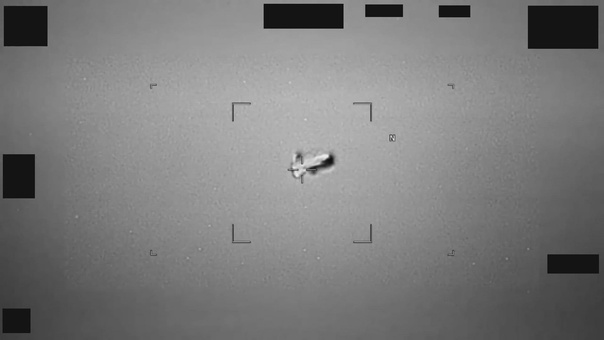
Editorial standard: this article distinguishes official records, reported claims and unresolved questions. A UAP label does not identify an object or establish an extraterrestrial explanation.
Japan has a long and unusually visible relationship with UFOs — mountain legends, unexplained lights and a public museum built around the subject. Now the country's lawmakers are asking whether unidentified aerial phenomena belong in a national-security briefing instead of a tourist brochure.
A museum at the foot of the mountain
For decades, Japan's UFO culture lived almost entirely outside government: in folklore, local legend, television documentaries and magazines. In Fukushima Prefecture, the town of Iino went further and built a museum around it — the UFO Fureai-kan, which opened in 1992 on the slopes of Mount Senganmori.
The museum presents UFO-themed exhibits and local material connected to the area’s long reputation for strange lights and unexplained objects. The surrounding area markets itself as “UFO Village,” a local identity rooted in those mystery traditions.
The museum does not try to settle anything. It simply preserves what has accumulated — stories, images and ideas — making it a useful window into how Japan has received the phenomenon: not as a fringe subject kept out of sight, but as something woven into local identity and tourism.
Fukushima carries a newer layer of this mythology too. After the 2011 earthquake, tsunami and nuclear disaster, residents and survivors reported strange lights over the region, accounts later repeated in documentaries and UFO publications. The details vary, but their significance is not really about what was or was not seen — it is about how the unexplained attaches itself to a place that already carries disaster, reconstruction and a fight over its own identity.
Japan's first formal military response
The political shift became visible in 2020, when then-defence minister Taro Kono ordered the Self-Defense Forces to establish procedures for unidentified aerial objects — instructing personnel to observe, record and report unidentified aerial objects that could pose a threat. Kono said at the time that Japanese military pilots had not encountered confirmed UFOs.
The policy mattered less for what it found than for what it changed: an unidentified object in Japanese airspace could no longer simply be waved off. The question shifted from “Are UFOs real?” to “What is entering our airspace?”
From curiosity to security
That shift accelerated after the United States created the All-domain Anomaly Resolution Office (AARO) to investigate UAP reports. U.S. analysis identified a concentration of UAP reports stretching from western Japan toward China between 1996 and 2023 — reporting that CBS covered and that helped pull Japanese political attention toward the issue.
Timing reinforced it. Japan has grown increasingly concerned about Chinese surveillance balloons, drones and military aircraft near its airspace; in 2024, drone footage apparently taken near a Japanese naval facility surfaced on Chinese social media, raising fresh alarm about the vulnerability of sensitive sites, as the Associated Press reported. Against that backdrop, an unidentified aerial phenomenon looks less like a strange light and more like a detection problem: it could be a drone, a surveillance platform, a sensor glitch or something harder to explain — and until it is identified, nobody knows which.
Lawmakers form a UAP group
In June 2024, Japanese lawmakers — reported by Reuters as a cross-party group that later drew more than 80 members, including former defence ministers — formed a group to push for better collection and analysis of UAP reports, closer cooperation with the United States and possibly a Japanese equivalent of AARO. Reuters reported that the group formed partly in response to U.S. reporting on UAP sightings over Japan and concern that some incidents could involve advanced foreign weapons or surveillance technology.
For these lawmakers, the operative question is not what these objects are so much as what their presence could mean — advanced foreign technology, a reconnaissance platform or an unmanned aircraft near a sensitive site. Until identified, the uncertainty itself becomes the security problem.
Tokyo's cautious position
The government has not launched a public disclosure programme. Its approach instead has been to gather information, coordinate with allies and decide case by case what can be released. In 2026, Chief Cabinet Secretary Minoru Kihara said Japan was reviewing newly released Pentagon material, including UAP incidents near Japan, while noting that any Japanese records would have to be weighed against the risk of exposing intelligence-gathering methods, according to The Japan Times.
That is a strikingly different posture from the one on display at Fukushima's museum. One preserves the mystery in public. The other is quietly assessing what the mystery might mean for national security.
From Senganmori to the security briefing
At the foot of Senganmori, the unexplained is still something to wander through — in exhibits, mountain legends, old clippings and the memories of people who believe they saw something unusual above Fukushima.
In Tokyo, the same mystery is read differently: as a question about who might be watching Japanese skies, with what capabilities and how much the government actually knows.
Neither view cancels the other out. Fukushima has not abandoned its folklore, and Tokyo's security concerns do not erase the region's stories — they have simply grown up alongside them. Together, they show that what a UFO means can depend on who is doing the looking.
In Fukushima, the unexplained has a museum. In Tokyo, it now has a seat on the security agenda. Which leaves a question governments everywhere are finding harder to dodge: when something in the sky cannot be identified, is it still just a mystery — or is it already a matter of national security?
Sources and records
- Fukushima City Tourism, UFO Fureai-kan
- CBS News, Japan UAP investigation and the western Japan–China hotspot
- Reuters, Japanese lawmakers and potential UAP security threats
- Associated Press, Japan response to drone footage near a naval facility
- The Japan Times, Tokyo reviewing Pentagon material near Japan
- Netflix, Encounters: “Lights Over Fukushima”
- Public Domain Review, Utsuro-bune Edo-period images