ACCIDENT
Loss of control
Night, weather, altitude changes and operations over a featureless lake create classic conditions for spatial disorientation or controlled-flight loss.
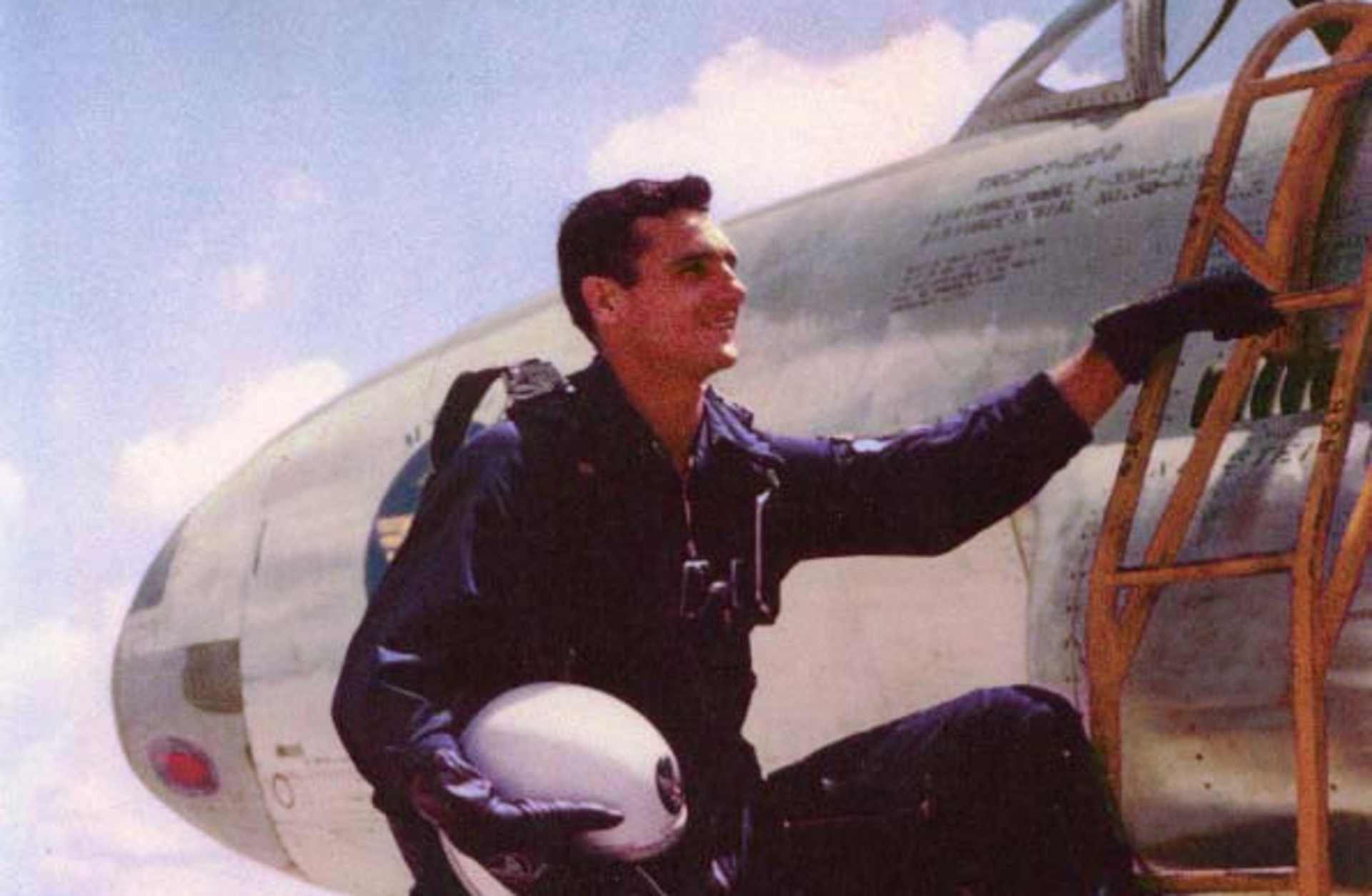
First Lieutenant Felix Moncla and Second Lieutenant Robert Wilson were scrambled in an F-89C Scorpion toward an unidentified radar target over Lake Superior. Ground controllers watched the interceptor close. The returns converged. Then the F-89 vanished.
On the evening of 23 November 1953, Air Defense Command radar detected an unidentified target over Lake Superior, in a strategically sensitive region near the Soo Locks and the Canada–United States border. An F-89C Scorpion interceptor was scrambled from Kinross Air Force Base in Michigan.
The crew was First Lieutenant Felix E. Moncla Jr., pilot, and Second Lieutenant Robert L. Wilson, radar observer. Moncla had substantial flying experience and was on temporary duty from the 433rd Fighter Interceptor Squadron at Truax Field, Wisconsin.
Ground control vectored the F-89 toward the target. Radar operators watched the fighter's return close with the unknown. The two blips appeared to merge. The F-89's IFF identification and radar return disappeared. The aircraft never returned, and no confirmed wreckage or remains were recovered despite an extensive search.
That sequence made Kinross legendary. But the word “merge” needs care. A radar display showing two returns overlap does not prove physical collision. It tells us that, from the radar station's perspective, the two targets occupied effectively the same angular/range resolution cell at the moment contact was lost.
Moncla and Wilson took off in F-89C serial 51-5853A at roughly 18:20 local time. The aircraft was an all-weather interceptor designed specifically to locate and engage targets at night and in poor visibility.
The weather over Lake Superior was poor, with darkness, snow and low temperatures complicating the mission. Ground-controlled interception radar guided the aircraft west-northwest over the lake and then toward the target.
According to the accident-report reconstruction, Moncla climbed to around 30,000 feet before later being cleared to descend, turning toward the unknown from above. The final radar contact placed the aircraft roughly 70 miles off Keweenaw Point and about 150 miles northwest of Kinross.
Moncla and Wilson launch from Kinross on an active air-defense interception.
GCI radar guides the Scorpion toward the unidentified target over Lake Superior.
Radar operators watch the F-89 close until the two returns overlap.
The fighter's radar/IFF return is lost and does not reappear.
Popular retellings sometimes describe controllers watching the UFO “swallow” the fighter. That is language, not radar physics. What operators reportedly saw were two returns closing until they appeared as one, followed by loss of the F-89's identification and radar contact.
The unknown return was also reported to depart or disappear afterward in some accounts. The precise wording differs between later narratives, news summaries and the surviving accident material.
No raw radar film or scope photography is publicly available to let modern analysts replay the event. The evidential core therefore rests on the official accident-board record and witness recollection about what the GCI operators saw.

The disappearance triggered a major search-and-rescue effort involving U.S. and Canadian assets. The aircraft had gone missing over one of the largest and deepest freshwater lakes in the world, in poor weather and darkness.
Searches covered lake and shoreline areas for several days. No verified debris field, survival equipment, bodies or identifiable wreckage from 51-5853A were found.
The absence of wreckage fuels the mystery but is not inherently anomalous. Lake Superior is vast, cold and capable of concealing aircraft wreckage, especially with 1953 search technology and uncertain final coordinates.
There were later claims that wreckage had been located, including a 2006 commercial salvage story. Those claims did not produce a verified recovery accepted as Moncla's aircraft and should not be presented as resolution.
First Lieutenant, age 27, experienced interceptor pilot.
Second Lieutenant and radar observer aboard the F-89C.
Tracked the interception and final convergence from the ground.
One official explanation associated the unidentified target with a Canadian aircraft that had strayed or was operating near the restricted region. In different versions this has been linked to a Royal Canadian Air Force transport.
The difficulty is documentary consistency. Canadian authorities later disputed or failed to substantiate the idea that one of their aircraft was in the exact position and circumstances necessary to explain the intercept target.
That does not prove the radar target was exotic. It means the most convenient identification never became as firm as a named aircraft with a matching flight plan, crew statement and position log.
The accident board still had strong conventional reasons to consider pilot disorientation, instrument trouble, fuel issues, structural failure or loss of control. The absence of a distress call does not rule those out; a sudden emergency over water at night can leave almost no time to transmit.
The hard facts are enough: an unidentified radar target, an interceptor vectored toward it, loss of contact at close radar proximity, and no recovery of the aircraft or crew. Everything beyond that must be labelled as interpretation.
Night, weather, altitude changes and operations over a featureless lake create classic conditions for spatial disorientation or controlled-flight loss.
A sudden systems or structural problem could explain abrupt loss without a distress call. No wreckage means the mechanism cannot be tested.
An unidentified friendly aircraft could explain the intercept order, but the exact Canadian-flight identification remains disputed.
If the unknown radar target was a real unidentified craft, the final convergence becomes potentially significant. Radar overlap alone cannot prove physical contact.
Preserves the aircraft identity, mission, crew, vectors and loss-of-contact reconstruction.
OPEN KINROSS DOCUMENT ARCHIVE →Next-day reporting describes the search, storm conditions and unidentified-aircraft mission.
READ CONTEMPORARY REPORT →UFO-research archive preserving the classic radar-merge narrative and accident-report extracts.
OPEN NICAP FILE →Accessible modern synthesis of Moncla, Wilson, the radar intercept, search and conflicting official explanations.
OPEN MODERN REVIEW →The aircraft may simply have crashed into Lake Superior during a dangerous night mission. That is entirely possible. But the intercept began because radar showed something that controllers wanted identified, and the fighter disappeared precisely as it reached that target. With no wreckage and no cockpit testimony, Kinross remains suspended between aviation tragedy and one of the Cold War's most unsettling radar mysteries.