Nearly two minutes
The sensor does not catch a momentary alignment. The three contrast areas remain in view for the full 1:59 release.
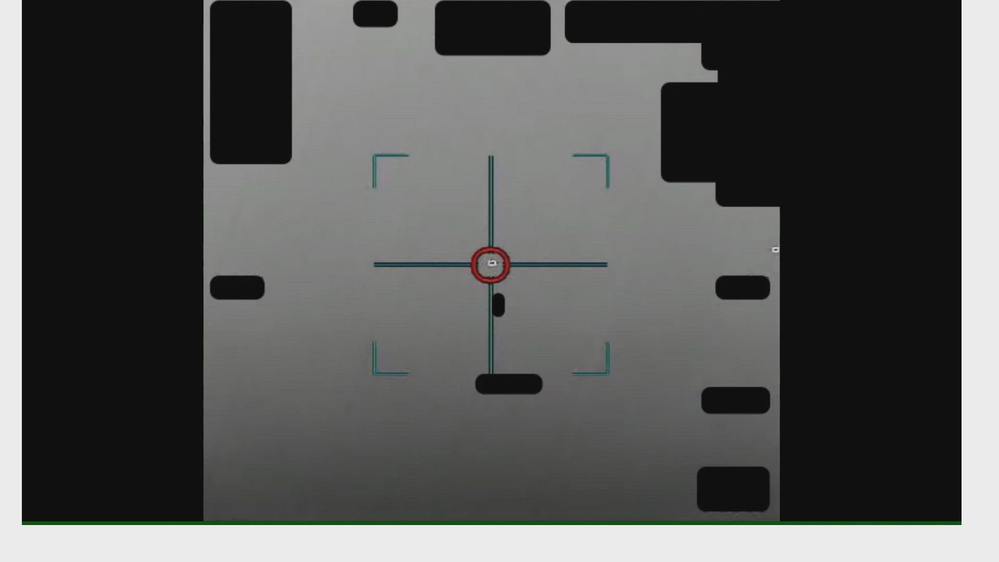
INDOPACOM · 2023 · PURSUE RELEASE 01 · PR47
For one minute and fifty-nine seconds, a U.S. military infrared sensor tracks three distinct areas of contrast. AARO says they appear to maintain a fixed position and orientation relative to one another. Japanese coverage has described them as “three glowing rings,” but the official language is more careful. The real strength of PR47 is not exotic manoeuvring — it is the persistence of that three-point geometry for almost two full minutes.
WATCH OFFICIAL PR47 VIDEO ↗THE FAST ANSWER
The sensor does not catch a momentary alignment. The three contrast areas remain in view for the full 1:59 release.
AARO specifically says the three areas appear to maintain fixed position and orientation relative to one another.
A two-dimensional sensor image does not tell us whether all three are at the same range or physically linked by coordinated flight.
WHY PR47 MATTERS
The relative arrangement appears stable for the full 1:59, making coincidence-over-a-few-frames a weaker explanation than it would be in a short clip.
The case is interesting without claims of acceleration, impossible turns or transmedium behaviour. Its value is the persistence of the geometry itself.
Two-dimensional stability does not tell us whether the sources were at the same distance, physically coordinated or even in the same depth plane.
THE ACTUAL RELEASED IMAGE
The visual is deceptively simple. The evidential interest comes from persistence: AARO says the three distinct contrast areas hold fixed relative position and orientation for the entire clip while the sensor keeps them generally centred.
WHAT THE GOVERNMENT ACTUALLY RELEASED
U.S. Indo-Pacific Command submitted PR47 to AARO as a report consisting of 1 minute 59 seconds of infrared video from a U.S. military platform in 2023.
The reporter provided no oral or written description. There is no published witness account, platform type, range, altitude, measured speed, radar correlation or explanation of why the sensor was tracking the scene.
DVIDS lists the location as undisclosed. The broader “Japan” label comes from the Department's Release 01 manifest and should be treated as manifest-level geography rather than a precise event location.
JAPAN — OR UNDISCLOSED?
The Department's Release 01 manifest associates PR47 with Japan. That is useful regional context, but it is not the same thing as a precise event coordinate.
The public DVIDS page itself does not publish a specific filming location. The safest phrasing is therefore INDOPACOM / Japan at manifest level, exact location undisclosed.
Competitor pages often collapse these two metadata layers into a single location claim. The UAP Map keeps them separate.
WHAT DOES “HELD FORMATION” REALLY MEAN?
They remain near the centre and keep similar relative spacing/orientation across the clip.
In image space, the three sources behave as a coherent-looking triad for nearly two minutes.
Without range to each source, similar angular motion cannot be converted into confirmed three-dimensional formation flight.
“The three lights held formation” is fair shorthand for the image behaviour. “Three craft flew in coordinated formation” is a stronger physical claim the public data cannot establish.
THE “THREE GLOWING RINGS” DESCRIPTION
Japanese-language and secondary coverage has described PR47 as showing three glowing rings. That phrase helps explain why the case has attracted attention, but it is interpretive language layered onto the sensor image.
AARO's official wording is deliberately plainer: three distinct areas of contrast. Without a resolved optical image, we should not turn ring-like appearance into a confirmed physical ring structure.
Use “three glowing rings” only as a media/search interpretation. Use “three distinct areas of contrast” when stating what the official record establishes.
THE TWO-DIMENSIONAL GEOMETRY PROBLEM
A moving sensor platform turns a three-dimensional scene into a flat image. Three unrelated sources at different distances can, for a time, maintain similar angular separation — especially if they are distant, slow relative to the line of sight, or the sensor is actively keeping the group centred.
To test genuine physical formation we would need range to each source, platform motion and attitude, angular separation over time, sensor field of view and raw frames. None of that is published in the PR47 release.
WHAT COULD IT HAVE BEEN?
| Candidate | Why it can fit | What is missing |
|---|---|---|
| Aircraft formation | Three aircraft can maintain highly stable relative geometry for minutes. | Traffic data, range, altitude, heading and resolved airframe signatures. |
| Drones / UAS | Multiple drones can fly fixed formations and appear as compact IR points. | Scale, operating context, range and mission information. |
| Stars / distant sources | Very distant fixed sources can preserve angular relationships while the sensor tracks them. | Sky orientation, sensor pointing, ephemeris and platform attitude. |
| Balloons / drifting objects | Objects in common wind flow may retain approximate spacing over a short interval. | Wind profile, altitude, range and drift direction. |
These are candidate explanation families, not identifications. The public release does not contain enough geometry to close the case.
HOW PR47 COMPARES WITH OTHER MULTI-OBJECT RELEASES
PR050 is shorter and geometrically messier. PR47 gives much longer persistence of a three-source arrangement.
PR101 is about a compact target resolving into a line of contrasts. PR47 begins and remains a three-source image.
Its evidential strength is not spectacular motion but the durability of the same relative image geometry for almost two minutes.
That makes PR47 a cleaner “formation appearance” case than several sibling releases, while still leaving the same missing-depth problem unresolved.
COMPETITOR PASS
UAP Globe does a strong job of foregrounding the authentic government footage, the black telemetry-redaction blocks, the full 1:59 duration, the no-witness limitation and the fact that the three contrasts do not visibly move relative to one another.
The UAP Map's opportunity is to make the next step clearer: stable relative image geometry is interesting precisely because it persists, but without depth and range it cannot tell us whether the sources were physically co-located, at different distances, or deliberately coordinated. V2 also separates Japan manifest metadata from the DVIDS-undisclosed location, captures the “three glowing rings” search language without adopting it as official morphology, and compares PR47 with sibling multi-object releases so readers can see why this file is unusually clean.
SOURCE ROOM