The longest exposure
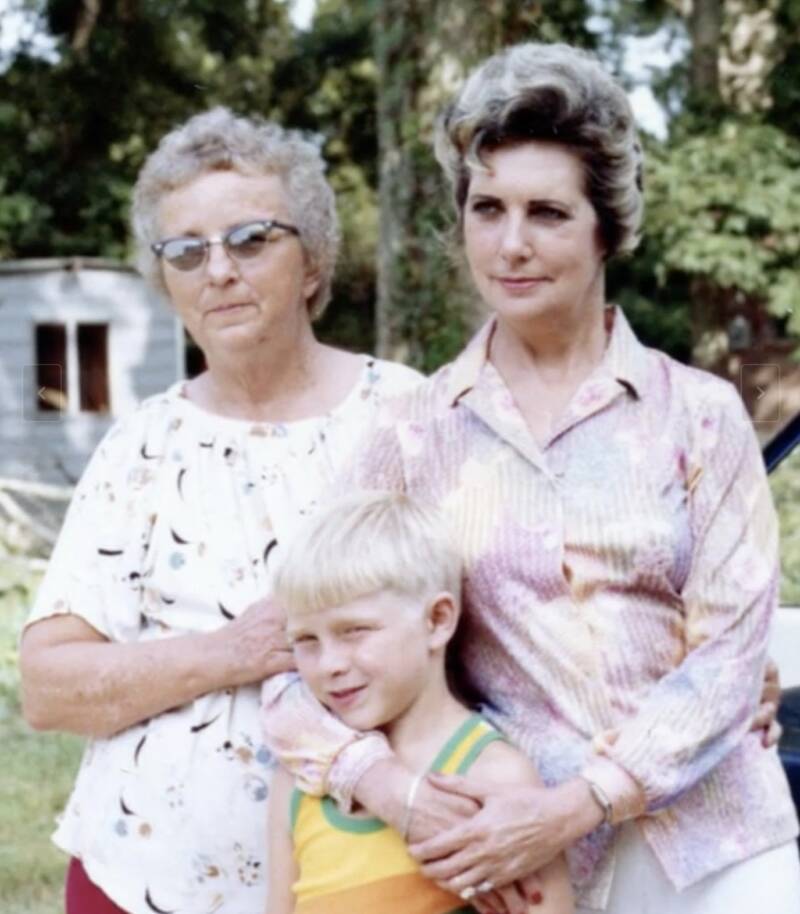
Driver and most severely affected witness. Cash said she remained outside the vehicle for several minutes and later suffered the most serious medical problems.
Three witnesses reported a heat-blasting object over a Texas road, then a sky crowded with military-looking helicopters. Days later Betty Cash was in hospital. The case would reach the Army Inspector General and a federal courtroom — without ever producing a public answer to the central question.
On Monday night, 29 December 1980, Betty Cash was driving her 1980 two-door Oldsmobile Cutlass with her friend Vickie Landrum and Vickie’s seven-year-old grandson, Colby. The route they later reconstructed ran through the Piney Woods between the New Caney and Huffman area, northeast of Houston.
The first thing they noticed was a bright light. In the later Bergstrom Air Force Base interview, Cash placed the main encounter at roughly 9:15 p.m. The light descended until, in her account, it was almost level with the treetops and directly ahead on the narrow road. The witnesses described fire or flame repeatedly coming from below the object and heat intense enough to make continuing forward seem impossible.
Cash got out. Vickie also came partly or briefly out before returning to Colby, who was frightened. Cash remained exposed longer. In the Bergstrom interview she said the car’s metal door handle was so hot that she used the pocket of her leather jacket to operate it when she climbed back inside.
When the object finally rose and moved away, the story did not become simpler. It acquired the feature that would transform a strange-light report into a government-accountability problem: helicopters — many of them — apparently moving with, around or after the object.
A strong light ahead, initially not necessarily extraordinary, becomes much brighter and lower as the car enters the isolated road corridor.
Later testimony describes a large luminous object over or immediately beyond the road, with repeated fire/flame beneath it. Cash remains outside longest.
They resume driving. The object remains visible as it moves away rather than simply disappearing.
Cash later tells Air Force claims personnel that twin-rotor helicopters were “completely around” the object and that she counted 23.
Cash-Landrum is often illustrated as though all three witnesses immediately gave the same crisp description: a giant diamond with a flat top, a flat bottom and fire blasting beneath it. The surviving early record is more complicated — and more valuable.
In the first documented accounts in early February 1981, Betty Cash said the brightness prevented her from making out a distinct figure. Vickie likewise said she could not clearly tell the shape. Colby, the seven-year-old in the car, was the witness who insisted it looked like a large diamond.
By 17 August 1981, at Bergstrom AFB, Cash drew a diamond when asked for the object’s shape. Vickie agreed with the drawing and added the downward fire. Both signed it. That document is authentic case evidence. It should be displayed — but it should not erase what they said months earlier.
Driver and most severely affected witness. Cash said she remained outside the vehicle for several minutes and later suffered the most serious medical problems.
Vickie described briefly exposing herself while also trying to control and comfort Colby. She later reported eye, skin and gastrointestinal symptoms.
Colby remained principally inside the car. In the earliest surviving accounts, his insistence that the object was diamond-shaped stands out because the two adults were less certain.
Early recorded and newspaper-linked testimony preserves uncertainty. Cash and Vickie do not begin with a clean, shared diamond description.
At Bergstrom, Cash is asked to draw what she saw “if it had a discernible shape.” She draws a diamond; Vickie agrees and adds the flame. The sketch becomes the iconic visual shorthand for the case.
Books, television and illustrations increasingly present the diamond as a fixed description. Some later art adds details that are much less secure in the earliest testimony.
Betty Cash became seriously ill after the encounter and was hospitalised in early January 1981. That is not merely UFO folklore. The harder question is what caused her condition, and whether the familiar label “radiation sickness” survives close medical scrutiny.
Cash later described rapid swelling, severe headaches, gastrointestinal illness, skin problems and hair loss. Vickie and Colby reported milder but overlapping symptoms. Investigators and doctors sympathetic to the radiation hypothesis argued that the pattern was suggestive of an unusual exposure. But the surviving medical summaries also contain findings that make a straightforward high-dose ionising-radiation diagnosis difficult.
The evidence does not require us to pretend Cash was fine. Medical-record summaries describe two early Parkway Hospital admissions and later hospital care. Investigators obtained physician commentary and sought a mechanism that could account for the timing and distribution of symptoms.
When Air Force claims personnel asked Cash why she had come to Bergstrom, she answered immediately: because of the helicopters. She said twin-rotor machines were completely around the object, that she personally counted 23, and that Vickie’s count was slightly higher. She also told the interviewers she saw “United States Air Force” markings.
The claim created a testable proposition. CH-47 Chinooks are not anonymous points of light. They belong to units, use fuel, require crews and maintenance, and normally generate records. A formation even approaching the reported size would be a major aviation event.

At Bergstrom, Cash acknowledged the counts varied because the witnesses were frightened, hot and ill. The “23” figure is therefore a reported count, not an instrumented total.
Dayton-area police officer Lamar Walker and his wife later reported seeing numerous Chinook-type helicopters in the area that night. They did not report the object itself. Their account is relevant corroboration of unusual helicopter activity, but it does not establish that the helicopters surrounded the same object.
The Department of the Army Inspector General investigated whether Army, Army National Guard or Army Reserve helicopters had been involved. Sarran’s memo explicitly says the inquiry was not designed to prove the UFO existed or to establish the cause of the witnesses’ medical problems.
The memo records calls to Army commands and aviation offices, Fort Hood, Corpus Christi repair facilities, Texas National Guard Chinook leadership at Ellington and Army Reserve Huey personnel at Tomball. After checks of available flight records, known helicopter activity in the general area came back negative.
Later reproductions of his findings describe Cash, Landrum and the Walker witnesses as credible, with no perception they were deliberately exaggerating. That judgement can coexist with the failure to identify an Army formation.
If the principal helicopter account is substantially accurate, the public record still lacks the unit, crews, mission orders and acknowledged reason for a large twin-rotor presence. If the Army record search is complete, then either the witnesses misidentified what they saw or the responsible aircraft fell outside the searched/acknowledged channels.
Acting Staff Judge Advocate Capt. John Camp, Claims Officer Capt. Terry Davis and assistant Pat Wolf record a detailed interview with Cash, Vickie and Colby in the base law library. The setting is a claims/legal meeting, not a revived Project Blue Book investigation.
Texas Department of Health records preserve Complaint C-12 and a radiation-control field report. No significant residual radiation above background was found in the surveyed area. The delay and uncertainty over the precise event spot limit what a negative later survey can prove.
Sarran checks Army-family helicopter involvement, contacts relevant commands and local aviation units, interviews case participants and reports no evidence tying acknowledged Army, Guard or Reserve helicopter operations to the event.
After administrative claims were denied, the witnesses pursued the United States in federal court. The case forced the ownership question into sworn governmental statements and a liability framework.
The lawsuit is often summarised as “the government admitted the UFO existed but refused to pay.” That is too loose. The pleadings show the plaintiffs had to connect their injuries to something for which the United States was legally responsible.
The government’s position attacked that bridge. Statements from Air Force, Army, Navy and NASA officials said their agencies did not possess an aircraft matching the object described. The plaintiffs also could not produce a documented military helicopter operation that linked the reported formation to the federal government.
On 21 August 1986 the case was dismissed. The decisive failure was not a judicial finding that Betty, Vickie and Colby invented the night, nor a judicial determination of what the object was. It was the inability to establish federal ownership or control strongly enough to impose liability.
That distinction matters. A failed Federal Tort Claims Act case is not a scientific explanation. It does, however, tell us something important about the evidence: after years of investigation, the witnesses still could not bridge the gap between “we saw military-looking helicopters” and “the United States legally owned and operated the thing that injured us.”
This reading takes the witnesses’ central account substantially at face value: an unknown object produced intense radiant heat, then departed in the company of numerous helicopters. Its attraction is that it treats the encounter and helicopter narrative as one event.
The downward flame and helicopter presence have long encouraged speculation about an experimental propulsion system or damaged programme under escort. The witnesses themselves leaned toward government responsibility rather than extraterrestrial origin when pursuing compensation.
The witnesses may have seen something unusual but conventional, while later interpreting unrelated or stress-triggered illnesses through the encounter. This reading gains force from the medical ambiguities and the lack of verified military ownership.
Skeptical treatments have proposed astronomical or optical stimuli for the initial light. Such explanations can address brightness and misperception but become harder to map onto the full close-range heat narrative and helicopter layer.
A definitive case page should not disguise absence as evidence. These are retrieval targets. If better first-generation material appears, the page should change with it.
Recorded meeting with Cash, Vickie and Colby plus Air Force legal/claims personnel. Essential for chronology, the helicopter count, markings claim and signed-object drawing context.
OPEN TRANSCRIPT ↗Early phone contacts, witness interviews, on-site work and helicopter investigation material. Vital for comparing the first testimony with later versions.
DOCUMENT INDEX ↗Cash’s diamond drawing, agreed and annotated by Vickie during the August interview. Use with the earlier shape uncertainty, not instead of it.
OPEN DRAWING ↗Documents the inquiry’s scope, commands contacted and negative findings on known Army-family helicopter activity.
READ MEMO / SCAN ↗State records covering the radiation-control survey, medical-record correspondence and later file history.
OPEN FILE GUIDE ↗Detailed review of the medical chronology and radiation hypothesis, including hospital-record material quoted by Schuessler and contemporary correspondence.
READ CHAPTER ↗Plaintiffs’ allegations and the government-liability theory in the actual federal action, rather than a later paraphrase of what the case supposedly proved.
OPEN COURT DOCUMENTS ↗Contemporary reporting on the damages claim and government position while litigation was active.
READ UPI ↗Cross-linked research guide to reports, interviews, Texas files, Army material and later case correspondence. Use as a retrieval map, not a substitute for the underlying records.
EXPLORE ARCHIVE ↗Cash-Landrum survives because it refuses to collapse into one clean claim. Three people described a terrifying close encounter. Betty Cash endured serious illness. A signed drawing and a recorded Air Force interview survive. The Army searched for the helicopters and did not find an acknowledged mission. The state found no residual radiation months later. A $20 million lawsuit failed because federal ownership could not be proved.
The mystery is not strengthened by pretending every later detail was present from the beginning. It is strengthened by seeing exactly where the accounts agree, where they evolved, what the documents establish and what forty-five years of investigation still have not produced.