MISIDENTIFICATION
Road vehicle / lights
Godfrey's first interpretation was a bus. Rain, darkness and reflections can distort shape and distance, though he insisted the object became clearly non-vehicular at close range.
Police Constable Alan Godfrey was searching for stray cattle near the end of a night shift when he saw what he first took to be a bus blocking Burnley Road. As he approached, he said the object was hovering five feet above the tarmac — diamond-shaped, rotating underneath, and reflecting his police lights.
Alan Godfrey was an on-duty West Yorkshire police constable when he reported an extraordinary close encounter on Burnley Road at Todmorden. His occupation matters because he was accustomed to observing incidents, recording details and producing reports. It does not make him infallible, but it gives the waking sighting a stronger documentary foundation than a story first told years later.
The encounter has become famous as an “alien abduction.” That label compresses two very different evidential layers. Godfrey consciously remembered the road, the hovering object, attempts to use his radio, a sketch made while looking at it, a sudden discontinuity and finding himself farther along the road. Months later, hypnotic regression produced a far more elaborate narrative involving beings, an interior environment and a figure called “Joseph.”
Godfrey himself remained unusually cautious about that second layer. He continued to insist the UFO encounter was real while acknowledging that he could not know whether the hypnosis material represented reality, dream, fantasy or some mixture. That distinction should govern the whole page.
He did make an official police report, and the case soon entered the local press and civilian UFO investigation. That gives the waking encounter a contemporaneous documentary spine. It does not mean the police force endorsed an extraordinary explanation, and later media treatment quickly amplified the stranger hypnosis-derived material far beyond the original report.
Near the end of his night shift, at roughly 05:00 on 28/29 November 1980, Godfrey was driving along Burnley Road looking for cattle reported loose around a housing estate. The weather was wet and the road surface rain-soaked.
Ahead, he noticed what appeared at first glance to be a large vehicle positioned awkwardly across the carriageway. He initially interpreted it as a bus. As he approached to within tens of feet, he said that interpretation became impossible.
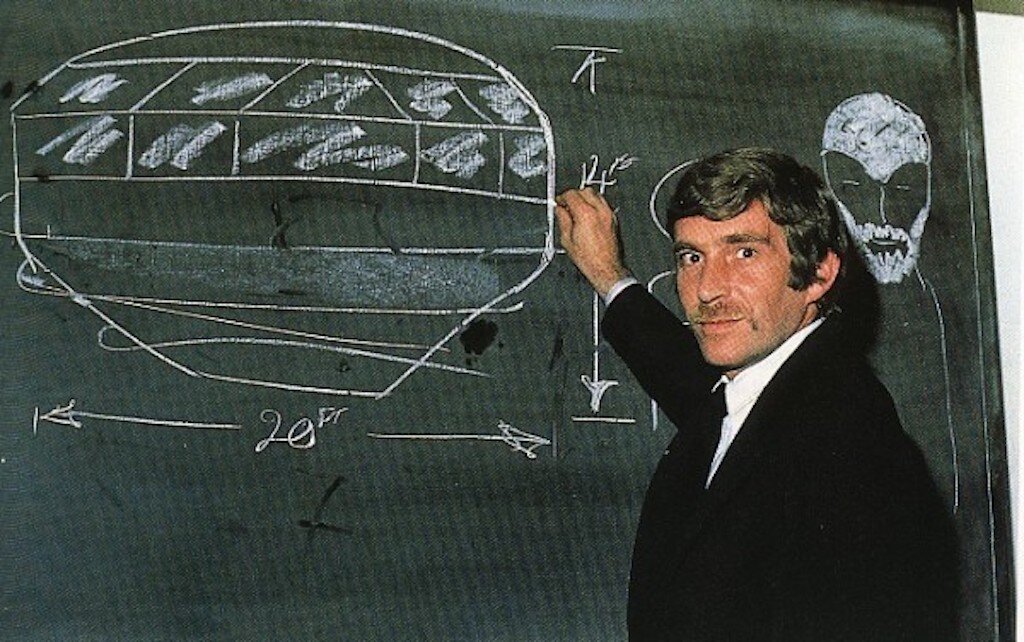
Godfrey described a roughly diamond- or spinning-top-shaped object about twenty feet wide and fourteen feet high. The lower portion appeared to rotate while the upper part contained a row of window-like panels. He said the whole object hovered around five feet above the road.
His headlights and blue police beacon reportedly reflected from the surface. Nearby vegetation appeared to move or swirl beneath it. There was no conventional road contact, exhaust or obvious means of support.
Godfrey reached for his communications equipment. He later said both the car radio and portable set failed to function. Rather than immediately leave, he took out a police pad and began sketching what was in front of him.
Godfrey sees a large obstruction across Burnley Road.
He describes a diamond-shaped form around five feet above the road with a rotating lower section.
Godfrey says his communications fail and he sketches the object while observing it.
The object is gone and Godfrey finds himself farther along Burnley Road.
One of the most useful pieces of evidence in the case is Godfrey's own drawing. Its value is not that a sketch can prove an object existed. It is that the sketch fixes his description early: broad diamond or spinning-top geometry, window-like panels, and a lower section he said was rotating.
The later drawings associated with the hypnosis session should not be mixed into that early visual evidence. A sketch of “Joseph” or the interior belongs to the hypnosis layer; the road-object sketch belongs to the conscious encounter.
Godfrey's next conscious memory was of being farther along the road, with the object gone. Later attempts to reconstruct his timings suggested a gap somewhere in the range of roughly fifteen to thirty minutes, though precise figures vary across sources.
He also reported physical oddities: a split police boot and irritation or marks on his leg. On returning to the location, he and others reportedly noted a dry or differently affected patch of roadway and disturbed vegetation despite the wet conditions. Later case summaries sometimes present these as confirmed landing traces, but the site was not secured immediately, measured systematically or sampled under controlled forensic conditions.
These details are intriguing but evidentially fragile. The road was not secured as a forensic scene immediately after the event, environmental conditions were not scientifically recorded, and the boot/leg marks do not have an established causal link to the object.
The strongest claim is therefore the discontinuity in memory itself — something Godfrey noticed before hypnosis — rather than any later explanation for what supposedly happened during it.
A discontinuity between sketching the object and finding himself farther along the road.
Godfrey reported both vehicle and personal radio problems during the encounter.
Later-reported split boot and skin irritation; cause not established.
Reported dry or disturbed area where the object had hovered; not preserved under controlled conditions.
Roughly eight months after the encounter, in July 1981, Godfrey underwent hypnotic regression in an attempt to recover the missing interval. Under hypnosis he described being taken aboard an object, encountering small beings or robots, a large black dog, and a human-like figure later called “Joseph.”
Those images made the case famous. They are also the least reliable part of it. Hypnosis is highly vulnerable to suggestion, confabulation and imaginative construction. It does not function as a reliable recording device for hidden memory.
Jenny Randles, one of the researchers most closely associated with the case, repeatedly treated the hypnosis material cautiously. Godfrey himself did too. That restraint is important because popular summaries often promote the hypnotic narrative to the status of recovered fact.
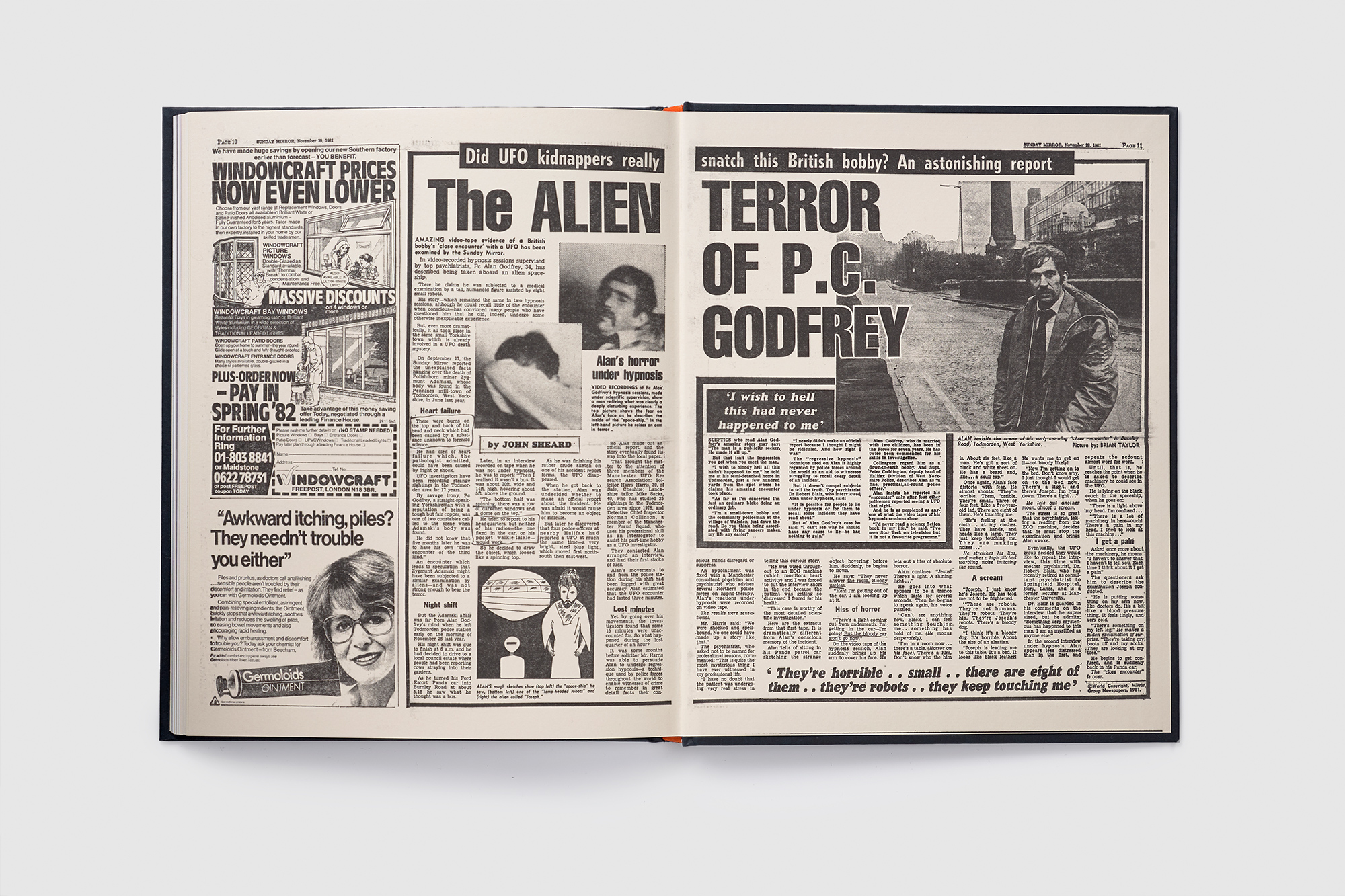
The correct evidential hierarchy is simple: contemporaneous conscious sighting first, the pre-hypnosis memory gap second, and the later regression narrative a distant third. That order matters because most popular retellings reverse it. The Sunday Mirror put the abduction material on its front page in September 1981, helping transform a police close-encounter report into a national alien-abduction story. That media shift is historically important because it explains why the beings and “Yosef” now dominate many versions of a case that began as a much narrower waking sighting.
The page can absolutely tell readers what Godfrey described under regression — it is central to the history of the case — but it must be labelled as hypnosis-derived material, not a verified memory of an onboard encounter.
Godfrey's first interpretation was a bus. Rain, darkness and reflections can distort shape and distance, though he insisted the object became clearly non-vehicular at close range.
The encounter occurred near the end of a night shift. Fatigue, microsleep or dissociation could contribute to a time gap and unusual perception.
The later abduction material is especially compatible with suggestion and confabulation under hypnosis.
If Godfrey's conscious close-range description is substantially accurate, the reported object does not fit an obvious conventional vehicle or aircraft.
Police-UFO databases preserve reports from other West Yorkshire officers who said they observed bright blue-white or unusual lights in the Calder Valley around the same period. One well-known entry involves PCs John Porter, Howard Turnpenny and Julie Baxter on the moors: Porter later remembered it as the same night as Godfrey, while FOI-derived material has been cited as dating that sighting about a week earlier. Two traffic officers near Littleborough also later reported a bright object heading in the direction of Todmorden. These are relevant regional correlations, but the dating and independence of the reports are not clean enough to treat them as direct corroboration of the Burnley Road object.
That material is relevant as regional context, but it should not be converted into direct corroboration of the close object on Burnley Road. None of those officers stood beside Godfrey and saw the same diamond-shaped craft at five feet above the road.
The same caution applies to the death of Zigmund Adamski, whose body Godfrey had encountered earlier in 1980. The Adamski case became culturally entangled with Godfrey's UFO report because both occurred around Todmorden and because of the strange circumstances of Adamski's death. There is no evidential chain proving the two events were connected.
Preserves Godfrey's own description of the twenty-foot-wide, fourteen-foot-high diamond-shaped object and its rotating lower section.
READ WITNESS ACCOUNT →Police-UFO database entry documenting Godfrey and other police sightings around Todmorden.
OPEN POLICE DATABASE →Preserves the distinction between the waking encounter and the later hypnosis material, including Godfrey's own uncertainty about regression.
OPEN CASE ACCOUNT →Useful modern reconstruction of the road encounter, reported trace details, missing time and evidential limits of hypnosis.
OPEN MODERN REVIEW →Later FOI material preserves the official reporting trail and highlights the chronology problem around supposedly corroborating police sightings.
OPEN FILE →Useful for testing the evidential strength of the police report, hypnosis material and later mythology without dismissing the original sighting by default.
READ CRITICAL REVIEW →Calderdale Local Studies documents Todmorden's real Futuro house, built in 1969 and photographed being moved around the town. Essential evidence for assessing the strongest local misperception hypothesis.
OPEN LOCAL ARCHIVE →Modern case reconstruction preserving the June 1980 death chronology, Godfrey's role at the scene and later non-UFO family-kidnap theories.
OPEN CASE FILE →The later abduction story is vivid, but it is not where the evidential problem lives. The real puzzle is earlier: why did an on-duty police officer stop his car, try his radios and draw a twenty-foot object that he believed was hovering a few feet above the road? If fatigue or perception created it, the experience was remarkably coherent. If something physical was there, Godfrey was extraordinarily close to it.